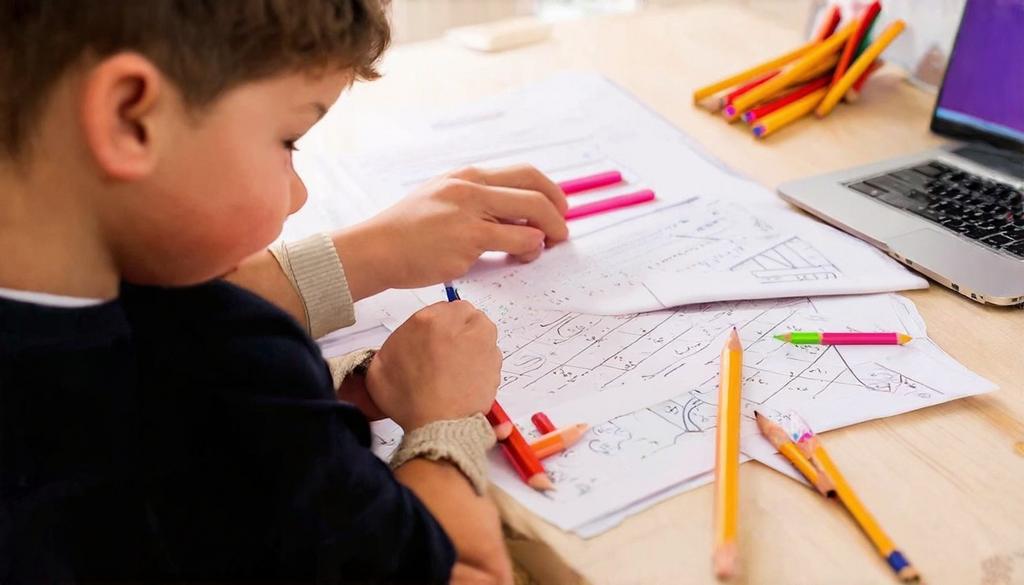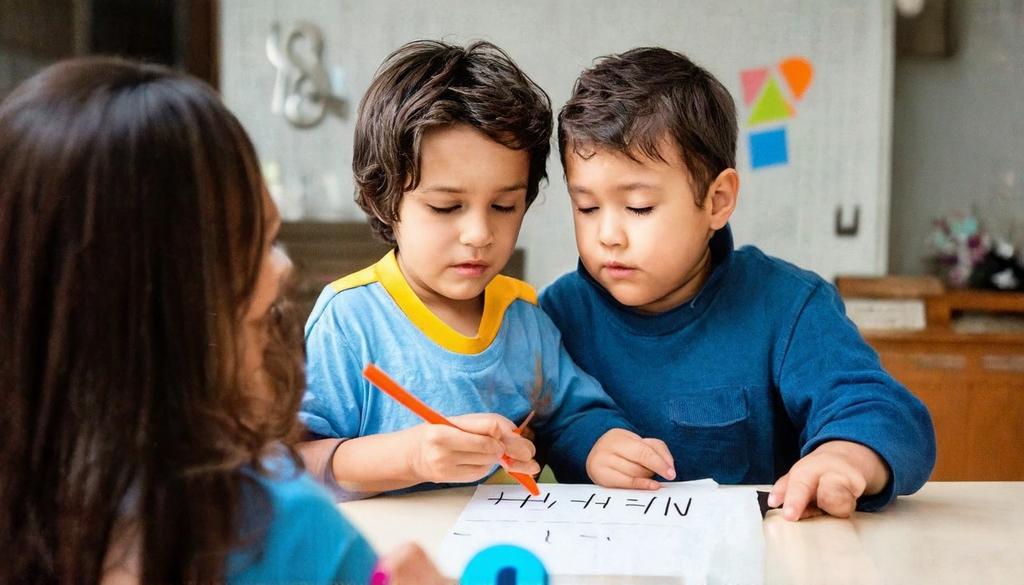
It comes out so naturally. Someone asks how school is going and you mention math, and you add: “She’s never really been a math person.” It explains the grades. It sets expectations. It feels honest. You’ve been saying it for a few years now, and she’s heard it, and probably started saying it about herself.
But consider, for a moment, what “not a math person” actually means as a statement about the brain. It implies that mathematical ability is a fixed trait — something you either have or don’t. That some brains are math brains and some aren’t. That your daughter’s brain falls into the second category.
Here’s where the science lands on that: it’s not how the brain works. And the phrase is doing more damage than you realize.
TL;DR
- “Not a math person” is an identity label that implies fixed ability. Neuroscience doesn’t support the idea of fixed math ability.
- Mathematical processing involves specific trainable cognitive systems — number sense, visual-spatial processing, working memory — not a math personality type.
- The phrase shapes what your child expects of themselves, which shapes what their brain attempts. It’s worth replacing it with something that’s both more accurate and less limiting.
“Not a math person” closes the door. “Building number sense” opens it.
“– Laura Lurns
The Myth of the Math Brain
The belief that mathematical ability is an innate trait — that you’re born either having it or not — is deeply embedded in how most adults talk about math, partly because most adults experienced it that way. Math felt like something that divided people naturally. Some got it effortlessly; some never did, regardless of effort.
What neuroscience has established is that what looks like innate math ability is almost always the presence of well-developed underlying processing systems. Number sense — the intuitive feel for how quantities relate — develops through specific types of experience. Visual-spatial processing — the ability to understand and manipulate spatial relationships that geometry and algebra depend on — is a trainable cognitive system, not a fixed trait. Working memory — the capacity to hold and manipulate multiple pieces of information simultaneously while solving problems — strengthens through targeted practice.
The child who seems like a “natural” at math has, almost always, a well-developed version of these systems. The child who seems not to be has underdeveloped versions. The difference is not a math personality type. It’s a processing profile.
What the Phrase Does to the Developing Brain
Children’s beliefs about their own abilities are not passive reflections of their performance. They’re active inputs that shape neural processing. Stanford research by Carol Dweck and colleagues has demonstrated that children who believe their abilities are fixed — whether in math or any other domain — show measurably different neural activation patterns during learning and measurably different performance outcomes than children who believe abilities are developmental.
When your daughter hears “she’s never been a math person” — especially from someone who loves her, whose view of her matters — that information goes into her model of herself. She approaches math problems differently than a child who hasn’t been told this. The brain that expects to fail at math allocates cognitive resources differently than the brain that expects to understand with effort. The expectation changes the biology. The phrase is not just descriptive. It’s prescriptive.
The How to Foster a Growth Mindset course helps parents make this shift in language practically — from fixed-trait framing to process framing — in a way that children can actually receive rather than dismiss.
Every parent who says “she’s just not a math person” means it kindly — they’re trying to protect their child from pressure, to accept them as they are. But the acceptance ends up accepting a false ceiling. “Not a math person” closes the door on investigating which specific processing system needs building. Once you open that door, the ceiling often turns out to be a gap, not a limit.
Key Takeaways
“Not a math person” implies fixed ability. The actual neuroscience points to trainable processing systems — number sense, visual-spatial processing, working memory — that can be developed at any age.
Children whose parents use fixed-trait language about their abilities show different neural activation patterns and different performance outcomes than children whose parents use developmental language.
Replacing the phrase with something accurate — “her number sense is still developing” or “we’re working on her math foundations” — changes what her brain expects and therefore what it attempts.
The phrase shapes the expectation. The expectation shapes the brain. Choose carefully.
“– Laura Lurns
The Curious Question Worth Asking Instead
What if, instead of “she’s not a math person,” the question became: “which processing system hasn’t been built yet?” That’s a question with an answer. And the answer leads somewhere.
Number sense that hasn’t been specifically developed responds to Speedy Numbers — targeted visual processing and number recognition work that builds the automatic number sense that math intuition depends on. Visual-spatial processing gaps respond to Eye Saccades. Working memory limitations respond to targeted cognitive training. None of these are personality traits. All of them are buildable.
Your daughter doesn’t need to become a math person. She needs the processing foundations that make math accessible — and those foundations can be built. Start your free 7-day trial of the Learning Success All Access Program and find out exactly which foundations need building — so the phrase can finally stop being true.