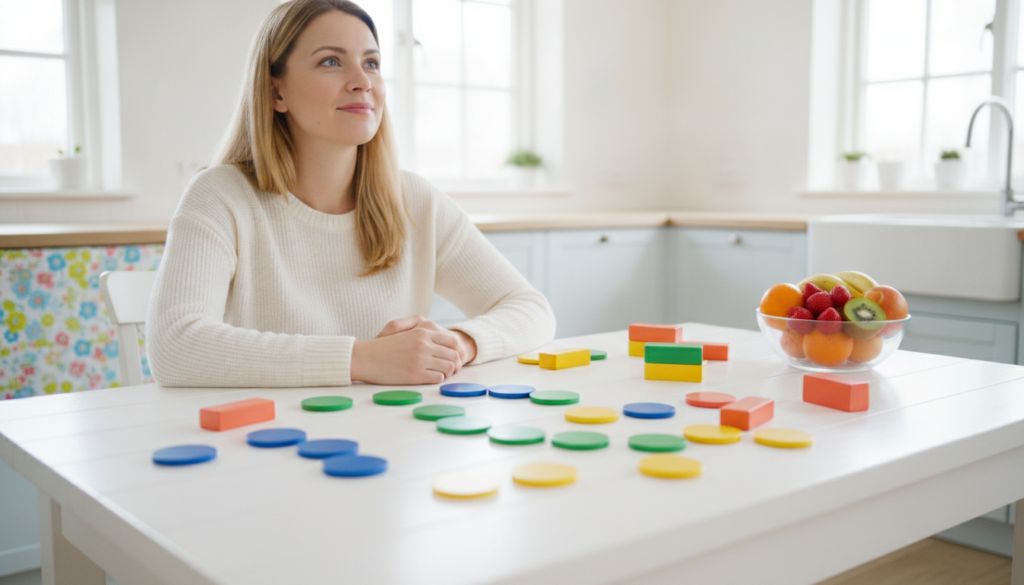
Here is what brain scans found in children aged seven to nine who dreaded math. The fear centers of their brains lit up like a threat alarm, while the regions that handle number reasoning went quiet.
That flips the usual story. Your child is not failing math because the ability is missing. The fear itself is jamming the signal, and a jammed brain performs like one that never learned the skill.
If you have a bright kid who freezes over a worksheet they handled fine yesterday, you are not imagining it. The anxiety is real, it is measurable, and it is learned, which means it comes apart the same way it went on.
TL;DR
- Math anxiety is a real brain response, not proof your child is bad at math. Scans show fear activity rising while the math-reasoning regions quiet down.
- The fear eats the working memory that math needs, so anxiety lowers scores, and low scores feed more fear. That loop is the self-fulfilling prophecy.
- You break the loop by rebuilding number sense in short, low-pressure, hands-on steps, so the brain relearns that math is safe. Anxiety is learned, so it comes undone.
Your child is not bad at math. Their brain is running a fear program that drowns out the thinking math needs.
“– Laura Lurns
The fear comes first, and the wrong answers follow
Picture the moment a timed worksheet lands on the desk. For a child who dreads math, the body reacts before the thinking starts. Heart speeds up, stomach tightens, and the brain shifts into threat mode. In that state, working memory, the mental scratchpad that holds numbers while your child works with them, floods with worry instead. Researchers watched this happen in seven to nine year olds: math anxiety raised activity in the amygdala, the brain’s fear hub, and lowered activity in the regions that do number reasoning. So the missed problems are not a verdict on ability. They are what a frightened brain produces. Your child owns the skills. The fear is standing on the hose. This is a difference in number sense and processing under stress, not a ceiling on how smart your child is.
Anxiety is learned, which means it comes apart
The story most of us absorbed says some people own a math brain and some do not. That story does not hold up. Math anxiety is not something children are born with. It is learned, most often from timed drills, red ink, and the message that speed equals smarts. What is learned gets unlearned. And the underlying skill responds too: brain-imaging work shows that targeted, patient number practice strengthens the same networks that a math difference was thought to leave broken. The brain you worry about today is not the brain your child will have after months of the right kind of practice. That is not a poster slogan. It is what the imaging shows.
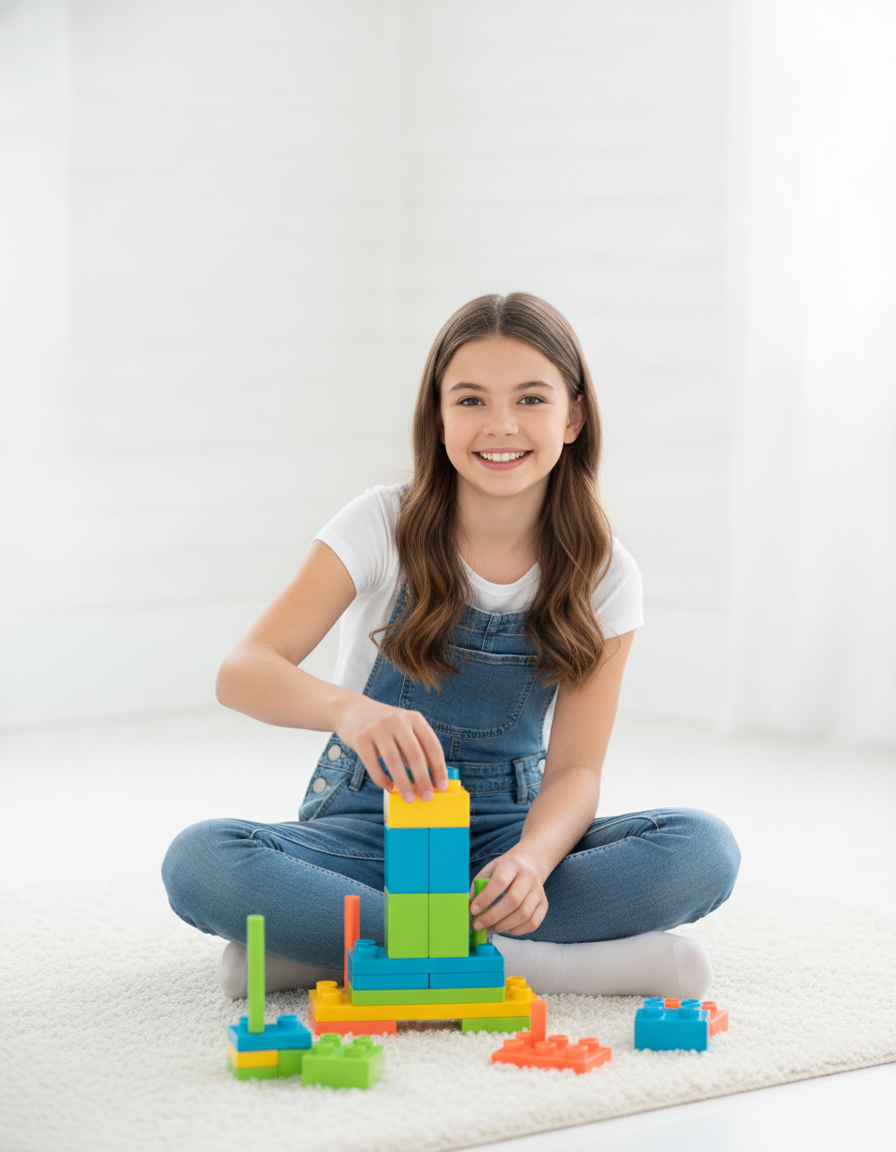
When a parent tells me their child shakes at math, the first thing I look for is not a math gap. I look for where the fear got installed, usually a timed test or a season of feeling behind. We take the clock off the table and rebuild number sense with things a child holds in their hands. What changes first is not the score. It is the shoulders coming down. Once math stops feeling like a threat, the thinking your child always had gets to show up.
Key Takeaways
Math anxiety is a measurable brain response. Fear activity rises, the reasoning regions quiet, and performance drops even when the skill is there.
The loop is self-fulfilling: fear lowers scores, low scores raise fear. Break it by lowering the pressure, not by piling on more timed drills.
Anxiety is learned and the underlying number skills are trainable. Short, hands-on, no-clock practice rebuilds both confidence and the wiring.
The school built the fear with a stopwatch. You get to take it apart at the kitchen table, one calm minute at a time.
“– Laura Lurns
What to do at the kitchen table
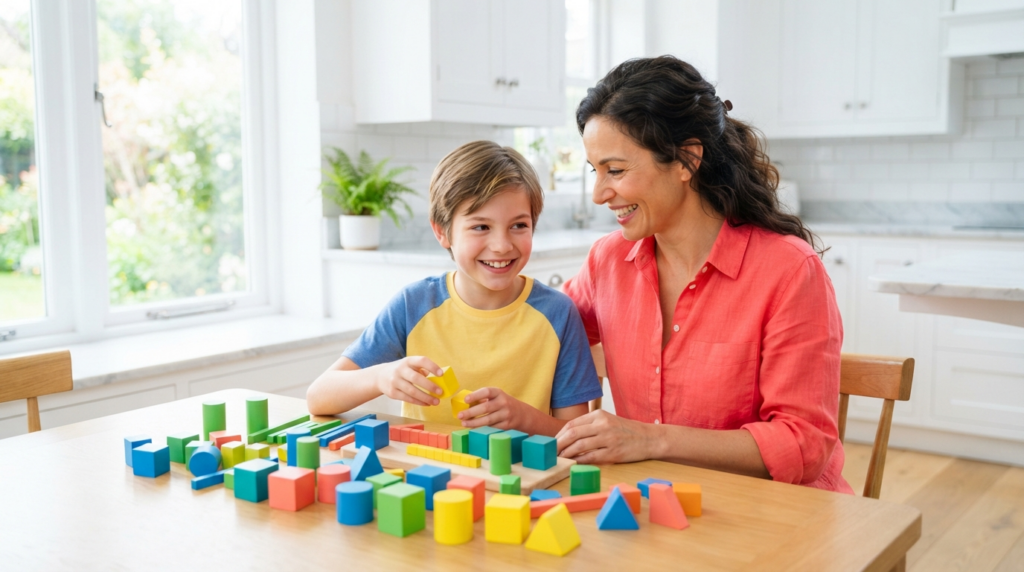
You want your child to feel capable, not cornered. The villain here is not your child and it is not you. It is a system that treats math like a race, then reads a frightened child’s slow time as proof they are behind. You get to write a different story. Start by taking the clock off. Use objects your child holds, blocks, coins, measuring cups, so numbers stay concrete and safe. Keep sessions short and end on a win. Praise the thinking, not the speed. Our Brain Bloom program builds the number sense and processing skills underneath the anxiety, one step at a time, so math stops feeling like a threat. But math fear rarely travels alone. Most children who dread math also carry that worry into reading, focus, or memory, because the same stress response follows them across the day. The All Access program starts with a short assessment that finds which skills need building and hands you a daily plan, so you treat the root instead of chasing symptoms.
Common questions from parents
How do I tell math anxiety from an actual math learning difference?
Will using blocks and counters hold my child back from real math?
My child says I’m bad at math. How should I respond?
Do timed tests cause the anxiety?