No one tells you that math has a floor beneath the floor. Before the worksheets, before the facts, there is a quiet sense of how much a number means. School assumes it is already there.
For your daughter, it is still being built. So she counts on her fingers for everything, because fingers are the one quantity she gets to hold, and she shuts down the moment the problem outgrows her hands.
This is not a math gene she missed. Her brain is learning differently, and the piece underneath the procedures, number sense, is buildable at any age. The wall she hits is real, and it has a door.
TL;DR
- Endless finger-counting and shutdowns are signs that number sense, the gut feel for how much a number is, never fully formed under the memorized steps. The wall appears when procedures run out and nothing underneath holds them up.
- This is a developing-skills story, not a permanent disability. Number sense is built through subitizing, estimating, and working with real quantities, not more drilling.
- Drop back below the worksheet. Short daily practice with small quantities rebuilds the foundation, and the shutdowns ease as the ground gets solid.
Fingers are not the problem. They are the one quantity your daughter has been handed that she gets to hold.
“– Laura Lurns
What the Fingers Are Actually Telling You
Counting on fingers is not a bad habit to break. It is a workaround, and a smart one. When a child has no internal sense of what ‘seven’ feels like as an amount, fingers become the one place quantity is visible and holdable. The trouble is that fingers run out at ten, and the math does not. So the moment a problem grows past her hands, there is nothing underneath to catch her, and she shuts down. That shutdown is not drama. It is what happens when the floor gives way. The skill she is missing has a name: number sense, the felt understanding of quantity, magnitude, and how numbers relate. It is the thing strong math students take for granted and struggling ones never got.
The Step School Skips
Here is the gap no one mentions at conferences. Most classrooms move straight to procedures and fact memorization and assume the sense of quantity underneath is already in place. For a lot of children it is, so the approach works and nobody questions it. For your daughter it is not, and drilling facts onto a missing foundation builds a taller wall, not a stronger learner. The repair starts lower than the worksheet. Subitizing, recognizing small groups of objects at a glance without counting, teaches the brain to see quantity directly. Estimating before solving builds a feel for magnitude. This is pattern recognition and quantity work, and it rewires the foundation that procedures are supposed to stand on. The math anxiety you are seeing is the result of standing at that wall too long, not a separate problem to manage.

When a parent tells me their child counts everything on her fingers and freezes when she gets stuck, I do not look at the math she is failing. I look underneath it. The fingers tell me number sense never set. We drop back to small quantities and subitizing, and within weeks the freezing eases, because she finally has ground to stand on. You build the floor, and the wall stops mattering.
Key Takeaways
Constant finger-counting is a workaround for missing number sense, not a habit to scold away.
Shutdowns happen when memorized procedures run out and there is no felt sense of quantity underneath to fall back on.
Build the floor first. Subitizing, estimating, and hands-on quantity work rebuild number sense and ease the shutdowns.
A diagnosis describes where your daughter is today. It does not predict where she will be after a year of building the floor underneath the math.
“– Laura Lurns
How to Take the Wall Down
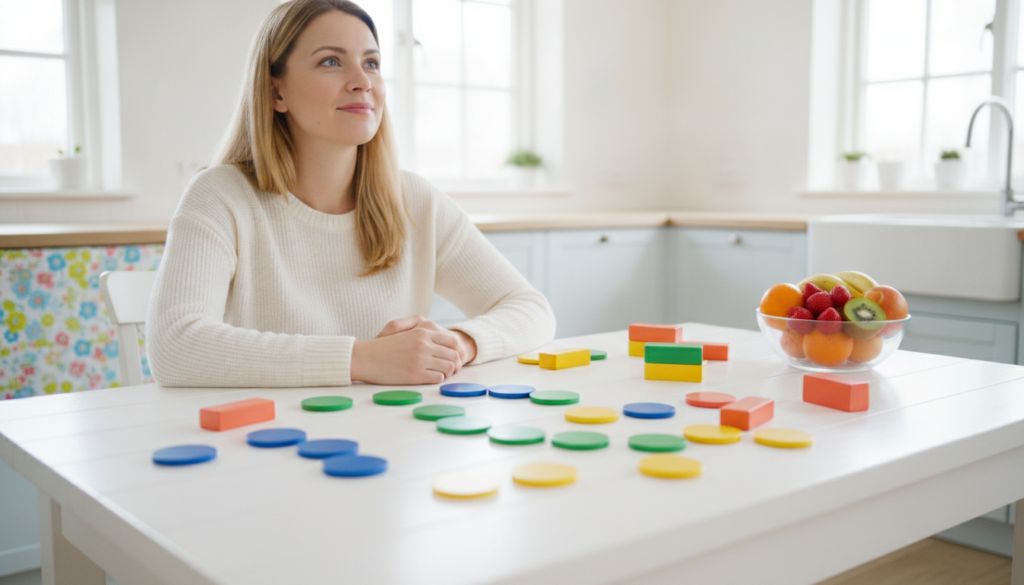
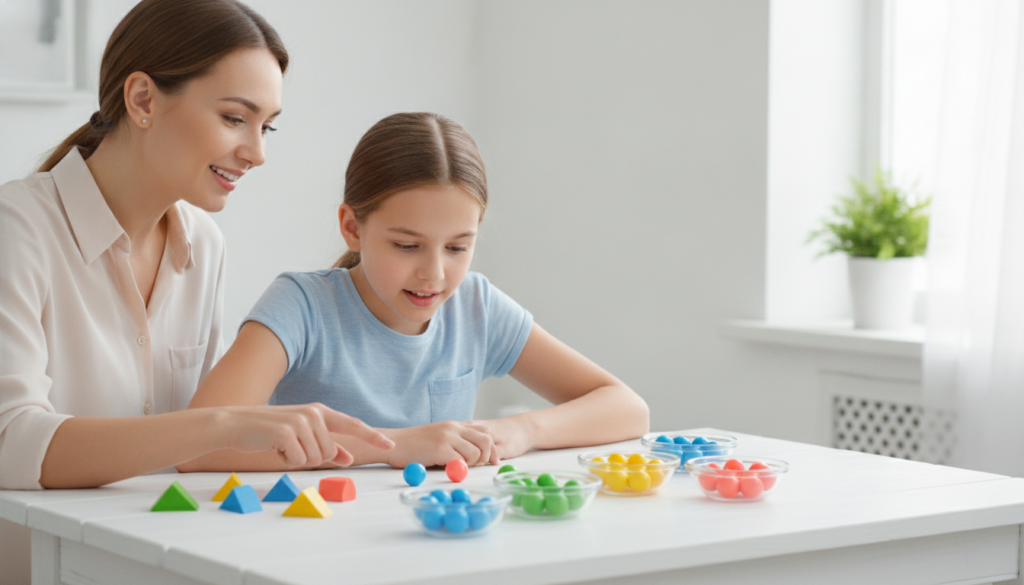
Step below the worksheet and stay there a while. Spend a few minutes a day on small quantities she gets to touch and group, so ‘six’ becomes a thing she sees, not a word she counts up to. Flash small clusters of objects and have her name the amount at a glance, which trains subitizing. Ask her to guess before she calculates, which grows a feel for magnitude. Keep it short, hands-on, and free of the timed pressure that built the freeze. The Brain Bloom program builds number sense and the cognitive skills under it in exactly this kind of daily, low-stress practice. You value a daughter who trusts her own mind around numbers. The system would rather label her and modify the curriculum down. You get to rebuild the floor instead and watch the ceiling rise with it. And math struggles rarely travel alone. Children developing number sense often show signs of stretched working memory and shaky confidence, which is why the All Access assessment maps the whole picture and hands you a daily plan. Start a free 7-day trial and find the first skill to build.
Common questions from parents
Is finger-counting something I should stop?
Does this mean she has dyscalculia?
Will more worksheets and timed drills help?
Why does she shut down instead of asking for help?