No one warns you about the gap. Your child tells long stories, remembers every detail of a trip, and talks circles around their friends. Then they sit down with math and go quiet.
It looks like they stopped trying. Some nights it feels like they are not listening. They are. What you are seeing is a brain working hard at something that has not clicked yet. A new language sounds like noise too, until the pieces finally break into words.
Here is the part no one hands you. A child who struggles with math is not broken. The label the world reaches for, bad at math, was never the right one. Their brain is learning to connect the symbols on the page to the amounts those symbols stand for, and that connection is built, not born.
TL;DR
- Math feels like a foreign language because the brain does not run it on one skill. It leans on a felt sense of how big amounts are, the memory that holds the steps of a problem, and a sense of how numbers relate. When one of those is still forming, the written symbols stay disconnected from the amounts they stand for.
- A struggle with math is not a sign of low intelligence. In one study, children with a specific math difficulty still found basic number tasks hard. They scored in the high-average range on tests of general ability, vocabulary, and memory (Landerl, Bevan and Butterworth, 2004).
- Number sense is teachable. Math ability is a skill set that grows with the right kind of practice, worked alongside your child’s math instruction. It is not a fixed talent you are born with or without.
A child who struggles with math is not bad at numbers. Their brain is still connecting the symbol to the amount it stands for.
“– Laura Lurns
What the brain is actually doing with a number
Picture the symbol for seven. A fluent reader of math does not see a shape. They feel a quantity, seven things, almost at once. Researchers call that felt sense of quantity number sense, and it is the ground the rest of math is built on. For some children, the link between the written symbol and the amount it stands for is still forming. The symbol lands, but the quantity behind it does not arrive with it. So the child counts on their fingers long after their classmates have stopped, and works out each sum from scratch instead of remembering it (Haberstroh and Schulte-Korne, 2019). It is slow, and it is tiring, and none of it is a matter of effort. Math leans on more than one skill at the same time. There is the sense of quantity, and there is the working memory that holds the steps of a problem while the child works through it. When one of those is still being built, the whole page feels foreign.
The myth that some kids are not math people
The oldest story about math is that you either have the gene or you do not. It sorts children into math people and everyone else, and a child who struggles quietly files themselves under everyone else. The evidence does not support the sorting. In one careful study, children with a specific math difficulty struggled with basic number tasks. Yet they scored in the high-average range on tests of general ability, vocabulary, and memory (Landerl, Bevan and Butterworth, 2004). The difficulty was specific to number, not a shortage of brains. That matters, because “I am not a math person” is less a description than a prediction, and children act on the predictions they make about themselves. The steadier truth is that math is a set of skills, and skills grow with the right kind of practice. What looks like a fixed limit is usually the edge of a skill that has not been taught yet.
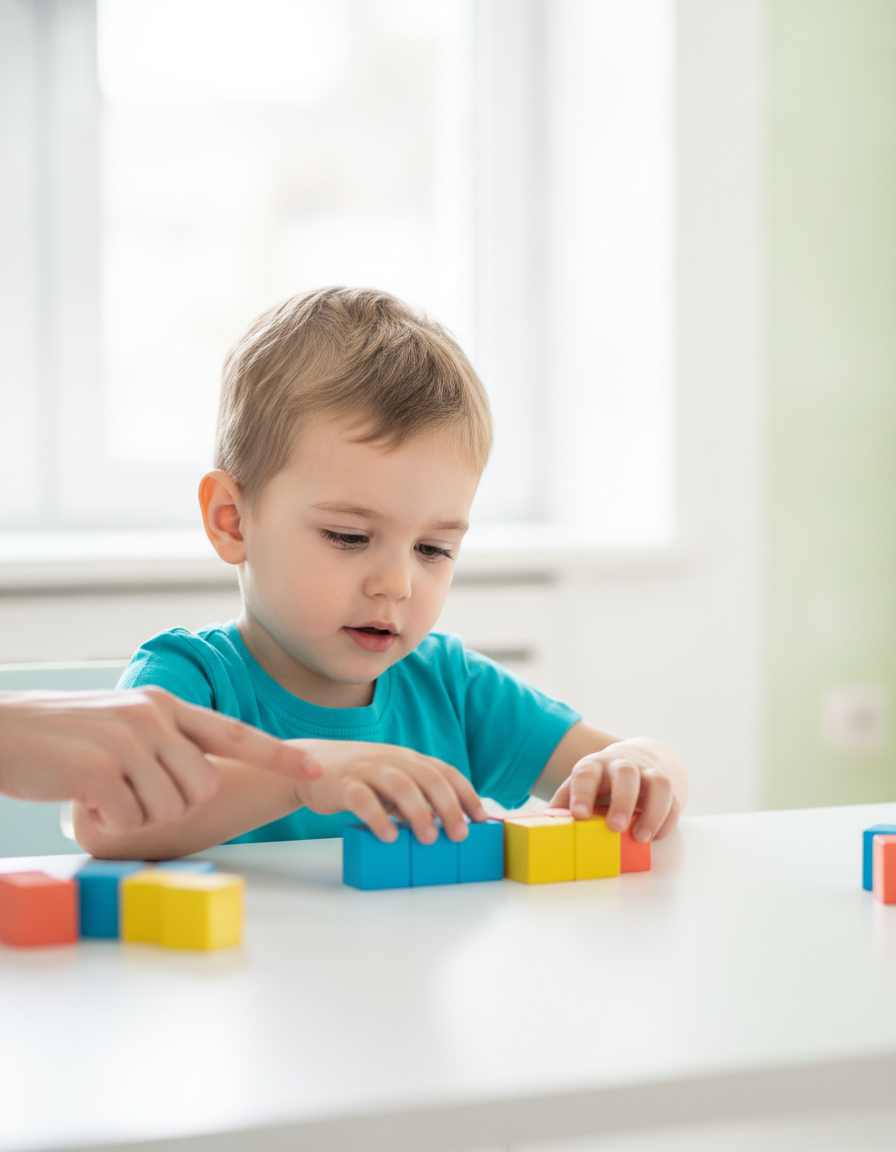
When a parent tells me their child is lazy about math, I ask to watch them work one problem. Almost every time, I see a child counting quietly under their breath, holding the whole problem in their head, working harder than anyone around them notices. To me, that does not look like laziness. Once we build the feel for quantity underneath, worked next to their regular math lessons, the numbers change. They stop being a wall and start being a language they are learning.
Key Takeaways
A struggle with math is a processing difference, not a measure of intelligence. Children with a specific math difficulty often test in the normal range for general ability.
The core of early math is number sense, the felt sense of how big an amount is. When symbols are not yet tied to quantities, every problem gets solved the slow way, from scratch.
Number sense is teachable, and it works best alongside your child’s regular math instruction. Math ability is a skill that grows, not a fixed talent you are born with or without.
The wall your child hits is not the edge of their ability. It is the edge of a skill that has not been built yet.
“– Laura Lurns
Where to start at home
Start small, and make the amounts real before the symbols. Pull out a handful of counters, or beans, or coins, and ask your child which pile is bigger, then let them check by counting. Share a snack by splitting it into equal parts out loud. Keep it to five minutes most days. That does more than an hour of worksheets that end in tears. The point is to attach the symbols to amounts your child is able to see and touch. You already know your child is capable, because you watch them be capable everywhere else. What fails them is not their brain. It is a system that hands out a label and drops them in the not-math-people pile. It calls that finished, instead of asking which skill to build first. You are the one person placed to refuse that story. Nobody will work for your child the way you will. When math is hard, we look at more than math. The feel for amounts, holding the steps in mind, how numbers relate. Our assessment asks about all of them, and the plan that comes back names the skill to build first. That is where a seven-day All Access trial begins, with the questions and then the plan, worked right alongside the math your child is already doing.
Common questions from parents
Is this dyscalculia?
My child is bright. How is math the problem?
Will my child catch up, or is this permanent?
What is number sense?