
The failing grade on the math test is not the hard part. The hard part is the face of a child who studied, who tried, and who still came home with the same result again.
That heartbreak is real, and so is the exhaustion of not knowing what you missed. Here is the reassuring part. A stack of failed tests almost never means a child is unable to do math. It usually means one quiet foundation was never fully built, and a timed test is the worst possible place to notice it.
Your child is not broken, and neither is your parenting. Their brain is learning to handle numbers differently, and that foundation responds to the right kind of practice far more than to another round of drills.
TL;DR
- When a child who studies keeps failing math, the missing piece is usually number sense, the brain’s intuitive feel for quantity and how numbers relate. Timed tests measure memorized procedures, not whether that foundation was built.
- Number sense is trainable. Concrete, visual, hands-on practice rewires the brain for math better than repeating worksheets that assume the foundation is already there.
- Failing tests measure the gap, not your child’s ceiling. The brain that struggles with math today is not the brain your child will have after months of foundation-building.
A stack of failed math tests is not a verdict on your child. It is a signal that one foundation was skipped, and foundations are buildable.
“– Laura Lurns
What a failing math test actually measures
Most math tests reward one thing: fast recall of procedures. Your child sits down, the clock starts, and the worksheet assumes a foundation is already in place. That foundation is number sense, the intuitive grasp of how big a number is, how quantities compare, and how they come apart and back together. A child who never fully built it is left to memorize steps that feel random, and memorized steps collapse under time pressure. That is why the scores stay low even when the effort is high. Building number sense with concrete, visual practice gives every later procedure something solid to stand on.
The brain builds math, and it keeps building
The belief that quietly does the most damage is the one that says some kids are simply not math people. Brain research says otherwise. Systematic, hands-on number sense instruction changes the brain, strengthening the pathways that handle quantity and calculation. The child in front of you is not stuck with today’s math brain. Imaging and intervention studies show that struggling learners develop the same processing pathways as their peers with the right kind of practice. Pattern recognition, working memory, and number sense are systems you build, not traits your child was handed at birth.

When a parent shows me a folder of failing math tests, I do not look at the grades first. I look for whether the child has number sense, that gut feel for quantity underneath the procedures. Almost every time, that is the piece that was skipped. We slow down, make numbers concrete and visual, and build the foundation the worksheets assumed. The tests were never measuring what the child was able to do. They were measuring a gap we could close.
Key Takeaways
Timed math tests measure fast recall of procedures, not whether a child built number sense. A studying child who keeps failing usually has a foundation gap, not a ceiling.
Number sense, pattern recognition, and working memory are the systems under math. All three respond to concrete, visual, hands-on practice.
Brain imaging shows struggling learners build the same math pathways as their peers with the right practice. Today’s math brain is not permanent.
You did not miss your child’s potential. You were handed a system that tests the foundation without ever teaching it. That ends the day you start building it.
“– Laura Lurns
Where to start when the tests keep coming back failed
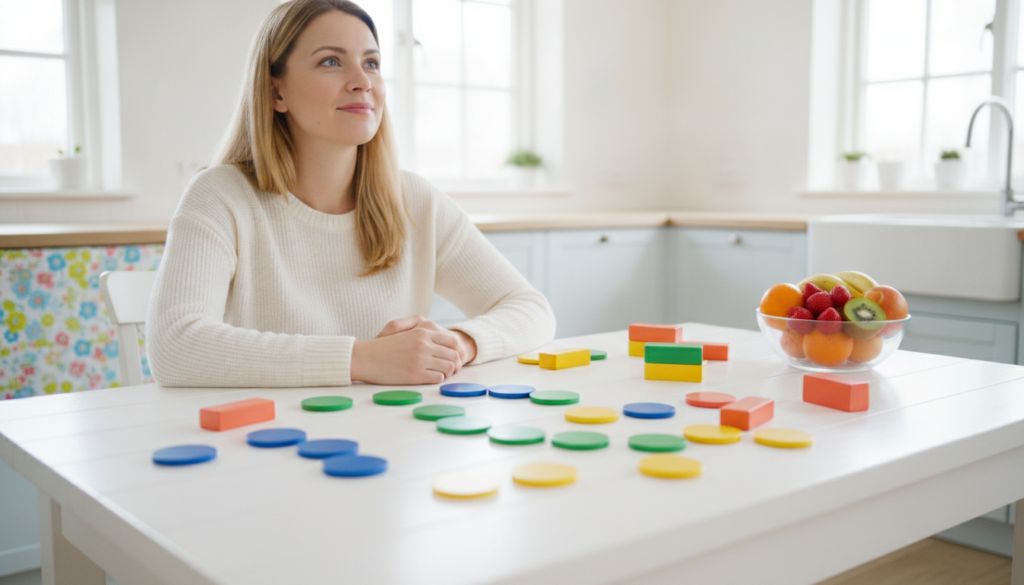
Put the worksheets down for a week and make numbers physical. Count, group, and compare with objects your child moves with their hands, so quantity becomes something they feel before it becomes something they write. Short daily sessions beat long frustrating ones. The Brain Bloom program builds the exact foundations under math, number sense, pattern recognition, working memory, and processing speed, in small steps that fit a real week. Here is what matters most. The system was fast to grade your child and slow to ask which foundation was missing, and that leaves loving parents feeling like they failed. You did not. And math struggle rarely travels alone. Many children who wrestle with numbers also show signs of working memory or processing speed lags, which is why a full picture beats another label. A short All Access assessment shows exactly which foundations to build first. If the heartbreak and self-blame have been heavy for a while, that is worth taking seriously too, and a trusted professional is there to help carry it.
Common questions from parents
Is this dyscalculia?
Should I ask the school for a math evaluation?
My child gets so anxious about math. Do I fix the anxiety or the skills first?
Will my child ever catch up in math?