

The line is always the same. She focuses on a puzzle for a full hour, so surely she could sit and do her homework if she wanted to. It sounds like plain common sense. It is also one of the most damaging misreadings a parent ever gets handed.
Attention that comes and goes is not proof of a choice. It is proof of a capacity that is present but not yet under steady control. The deep focus you saw during the puzzle is the real ceiling. The homework is telling you about the conditions, not about the child’s character.
Read that way, the inconsistency stops being the thing to punish. It becomes the clue that points straight at what to build.
TL;DR
- Attention that comes and goes is not laziness or defiance. It is a self-regulation system that works but is not yet consistently under your child’s control, and the inconsistency itself proves the capacity is there.
- What flips focus on and off is a set of brain-chemistry conditions: interest, novelty, movement, sleep, and dopamine levels relative to what came right before. Change the conditions and the focus follows.
- Self-regulation is a skill the brain builds with practice, not a fixed trait. The path is training the conditions and the skill, not demanding more willpower from a child who already shows they have the focus in them.
A child who focuses for an hour on what grips them is not a child without focus. They are a child whose focus is still waiting on the right conditions.
“– Laura Lurns
Inconsistency Is Information, Not Defiance
Start with what the on-and-off pattern is actually telling you. When your child locks into a video game or a set of blocks, their brain is flooded with dopamine, the chemical that drives motivation, focus, and the sense of time passing. High interest and fast feedback keep that chemical high, and attention comes for free. Homework offers slow feedback and low novelty, so dopamine sits low, and the same brain now has to force focus instead of riding it. That is not a different child. It is the same attention system meeting completely different conditions. The focus foundations that hold steady across both are what is still being built. The variability is the map of exactly where.
The ‘He Could If He Wanted To’ Trap
Here is the myth worth retiring. When a bright child focuses hard on one thing and drifts on another, the easy conclusion is that they are smart enough, so the gap must be laziness or attitude. Decades of work on attention and self-regulation say otherwise. The ability to steer focus onto something low-interest, on demand, is a specific brain skill that develops with age and practice. It runs on the prefrontal cortex and on dopamine signaling, and it matures unevenly. A child high in one area is fully able to lag in this one, with no contradiction and no defiance involved. Calling it laziness does more than miss the mechanism. It teaches a capable child to believe the problem is who they are, right when the skill is still coming online.
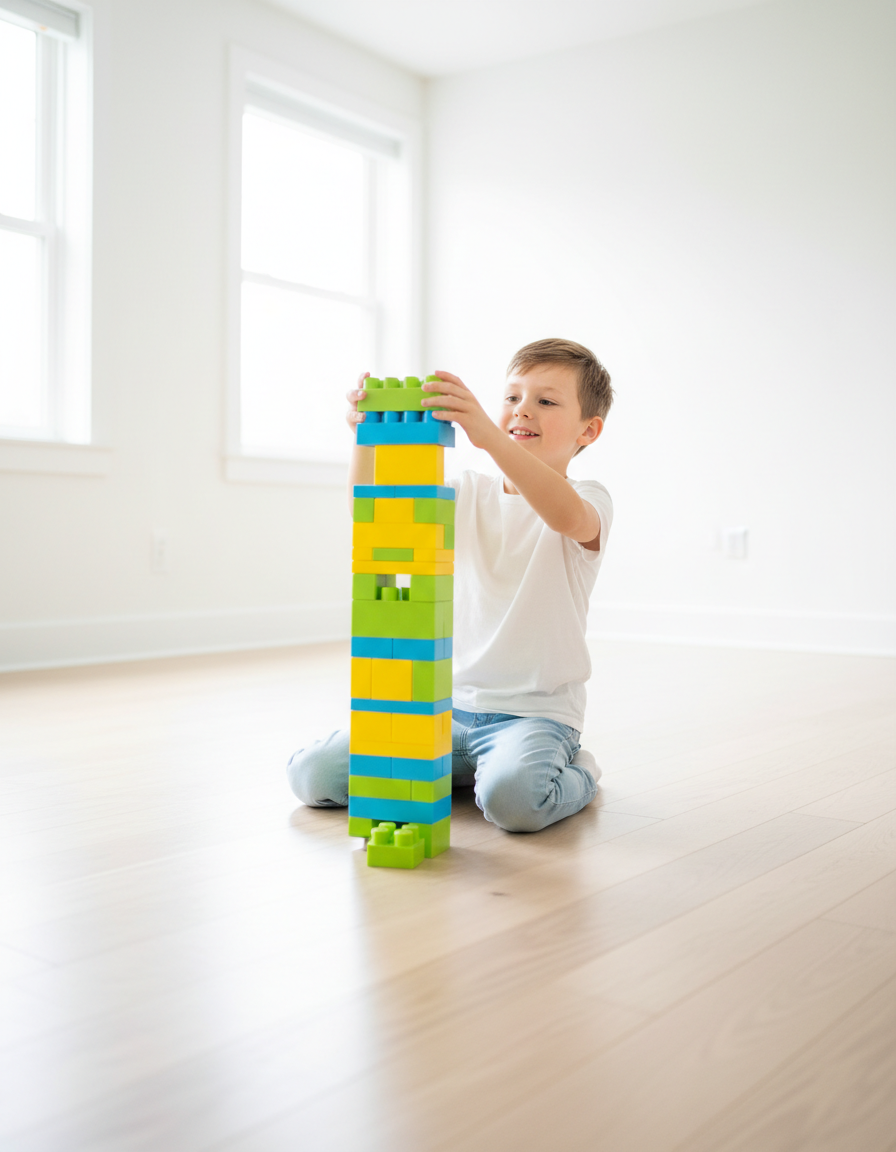
The children parents describe as inconsistent are almost never the ones missing attention. They are the ones whose attention has not yet come under their own steady control. I look for what switches their focus on, then we build the same conditions, movement, sleep, interest, and short wins, into the tasks where it usually drops. Attention practiced under mild difficulty grows. Attention demanded through pressure shuts down. The inconsistency is where we start, not what we fight.
Key Takeaways
Attention that comes and goes signals a self-regulation skill still maturing, not a character flaw. The strong focus your child shows on high-interest tasks is proof of their real capacity.
Focus rides on brain-chemistry conditions: interest, novelty, movement, sleep, and dopamine relative to what came right before. Shaping those conditions does more than any demand for willpower.
Self-regulation grows with practice under mild, supported challenge. Pressure and shame shut it down. Build the conditions and the skill, and the consistency follows.
Your child is not choosing to lose focus. They are waiting for someone to help them build the switch they do not yet control.
“– Laura Lurns
How to Build the Switch They Do Not Yet Control
You value a child who trusts their own mind, not one who has been taught to read every off day as proof they are broken or lazy. The villain is not your child and not you. It is a story that mistakes an uneven, maturing skill for a moral failing and punishes the child for it. You are the one who sees the focus that shows up on the things they love, and you are the one who helps carry it into the things they find hard. Begin by protecting the basics that set dopamine: sleep, daily movement, and less high-stimulation screen time before hard tasks. Then train the skill in short, winnable reps. The Brain Bloom program is built to strengthen exactly these focus and self-regulation foundations. Attention struggles rarely travel alone either, and a child whose focus wavers often shows signs of strain in working memory or emotional regulation too. The All Access program pinpoints which skill to build first and hands you a daily plan. Start the free 7-day trial and help your child build the switch.
Common questions from parents
If my child focuses fine on games, does that rule out an attention difficulty?
Is inconsistent attention a sign of ADHD?
How do I help without turning every task into a battle?
Will my child grow out of it on their own?

