
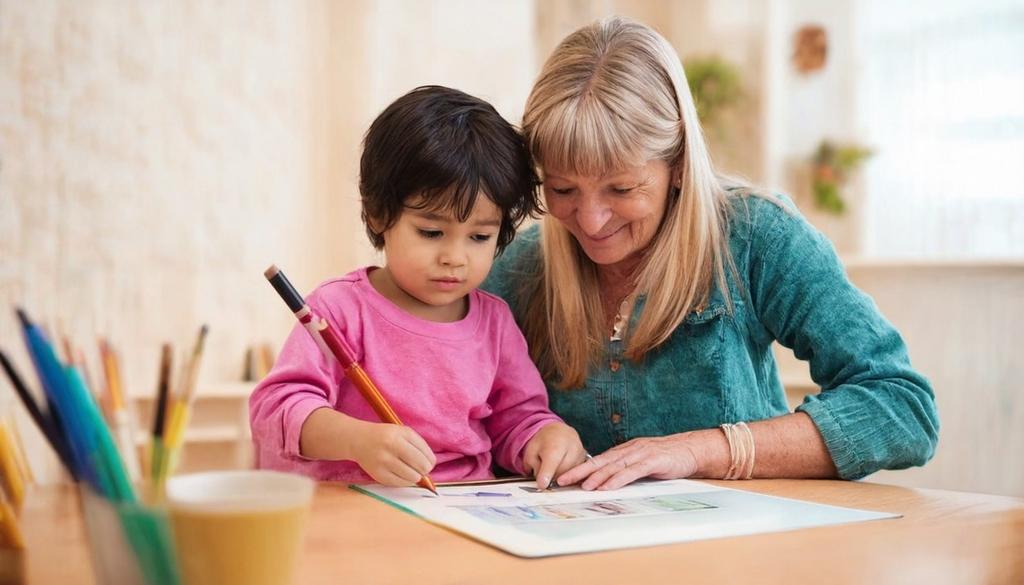
No one warns you about this part. Your child is reading you as closely as any worksheet. Long before they decode the page, they decode your face.
When learning time arrives and your shoulders tighten, your child feels the shift. Their body answers yours. The room fills with a quiet signal that says this moment is dangerous, and a brain braced for danger has less room left for reading.
This is not a charge against you. Your worry is love with nowhere to go. It is also information you are able to use, because the emotional weather in the room is one thing you hold real power over.
TL;DR
- Children co-regulate off their parents, so your anxiety raises their stress, and a stressed brain has fewer resources left for the focus and memory that learning needs.
- How a child reads stress changes their physiology. Stanford research by Ali Crum shows that framing stress as helpful improves both performance and health.
- Steadying your own frame, and teaching your child that a racing heart means their body is getting ready, is itself a performance intervention.
Long before your child decodes the page, they decode your face.
“– Laura Lurns
Your Child Is Reading the Room, Not Only the Book
Children are wired to check a caregiver’s face to learn whether a moment is safe. It is one of the oldest survival systems we have. So when homework starts and your voice tightens, your child’s body reads it in an instant. Their own stress climbs. A brain in that state spends its energy scanning for threat instead of holding a sentence in working memory and focus. The struggle you worry about grows a little in the same moment you worry about it. That is not a flaw in your child, and it is not a flaw in you. It is how the nervous system was built.
Stress Is Not the Enemy. The Story About Stress Is.
Here is the part that changes everything. Stress by itself does not wreck performance. The story a child tells about the stress does. Stanford research by Ali Crum studied this directly. People taught to see stress as performance-enhancing showed better outcomes and healthier physiology than those taught to see it as harmful. David Yeager’s 2022 study in Nature found that a short lesson pairing a growth mindset with a stress-is-helpful mindset improved how students handled academic pressure. Your child learns that story mostly from you. A parent who stays steady is not hiding stress. They are showing that difficulty is safe to enter, and that struggle is part of how a growing brain gets stronger.
The parents I worry about least are not the calm ones. They are the ones who noticed their own anxiety and decided to work on it out loud. When a child hears ‘this is hard for me too, and we are going to be okay,’ something in their body settles. That settled state is where learning actually happens. You are not responsible for feeling no fear. You are responsible for what you model on top of it.
Key Takeaways
Children co-regulate off their parents, so your calm is a direct input to their focus and memory.
The goal is not a stress-free home. It is a home where stress is framed as the body getting ready, not proof of danger.
Naming your own anxiety out loud, then steadying, teaches your child that difficulty is safe to face.
You set the emotional weather in the room. That is not pressure. That is the most powerful lever you hold.
“– Laura Lurns
What to Do With Your Own Worry
You want your child to walk into hard things believing they will be okay. A culture that treats every low grade as a crisis works against that, handing you an alarm that never switches off. You get to switch it off first. Breathe before homework. Name the reframe out loud. Our Growth Mindset Course gives you the exact language for turning ‘I’m so behind’ into ‘my brain is building this.’ If your worry, or your child’s, stays high and hard to shift, talking with a counselor or your doctor is a strong step, not a failure. Learning stress rarely travels alone, so most children who feel it also show signs of stretched attention or shaky confidence. The All Access program helps you build the underlying skills and the calm around them at the same time.
Common questions from parents
Does my anxiety affect my child’s grades?
Does this mean I should hide my stress from my child?
Is some stress actually good for learning?
When should I get outside help for anxiety?

