

It starts with good intentions. You sit down to help with the reading, the math, the project, and twenty minutes later you are both upset, she is in tears or shut down, and you are the bad guy again. You wanted to be her support. Somehow you became the person she dreads doing the work with.
If helping your own child has turned you into the enemy more often than the ally, you are not doing it wrong because you lack patience. You are running into a real tension that every parent-teacher hybrid hits, the same person holds the warmth and enforces the worksheet, and those two jobs pull against each other.
The good news is that this is a structural problem with structural fixes. You keep the relationship and still get the learning, once you stop asking one moment to carry both.
TL;DR
- To help at home without becoming the enemy, protect the relationship first and treat the task as second, because a child learns from someone she trusts and shuts down with someone she is bracing against, and the connection is what makes the teaching land.
- Work with the brain’s chemistry, not against it: keep sessions short, run them when motivation has fuel rather than after a draining school day, and praise effort and strategy over the grade, which builds the kind of motivation that survives without you hovering.
- Let productive struggle happen instead of rescuing at the first sign of difficulty, because for a developing brain, difficulty engaged with is part of how the wiring actually changes, while being rescued teaches a child to wait for you.
The same parent holds the warmth and enforces the worksheet, and those two jobs pull against each other. The fix is to stop asking one moment to carry both.
“– Laura Lurns
Why helping your own child feels like a fight
When a teacher corrects a child, it is a job. When a parent corrects a child, it lands closer to the heart, because the relationship is on the line in a way it never is at school. That is not a flaw in you. It is the reason home learning carries a charge a classroom does not. There is also a timing problem hiding in plain sight. Homework usually happens after school, when a child’s motivation engine is already running low and a high-stimulation day has left the dopamine baseline depleted. Asking a tired, tapped-out brain to push through its hardest task at its lowest-energy hour is a setup for conflict. Move the work to a better hour, prime the brain with a few minutes of movement and focus priming first, and a surprising amount of the fighting disappears before it starts.
Praise the effort, not the points
The common fix for a reluctant learner is to bolt on rewards, stickers, screen time, a treat for finishing. It backfires more often than it works. High-stimulation rewards trigger a dip below the dopamine baseline that makes the next ordinary task feel even harder to start, and external rewards quietly teach a child to work for the prize rather than the mastery. A points system makes a child feel like she is learning. Real mastery makes her feel capable, and those are not the same feeling. The durable version comes from helping her notice the micro-satisfaction inside the work itself, the moment a hard problem gives way. So narrate effort and strategy, not outcomes. ‘I saw you stick with that when it got tricky’ and ‘that was a smart way in’ build a learner. ‘Good job, here is your screen time’ builds a negotiator. This is the engine of a growth mindset, and it is trainable like any other skill.
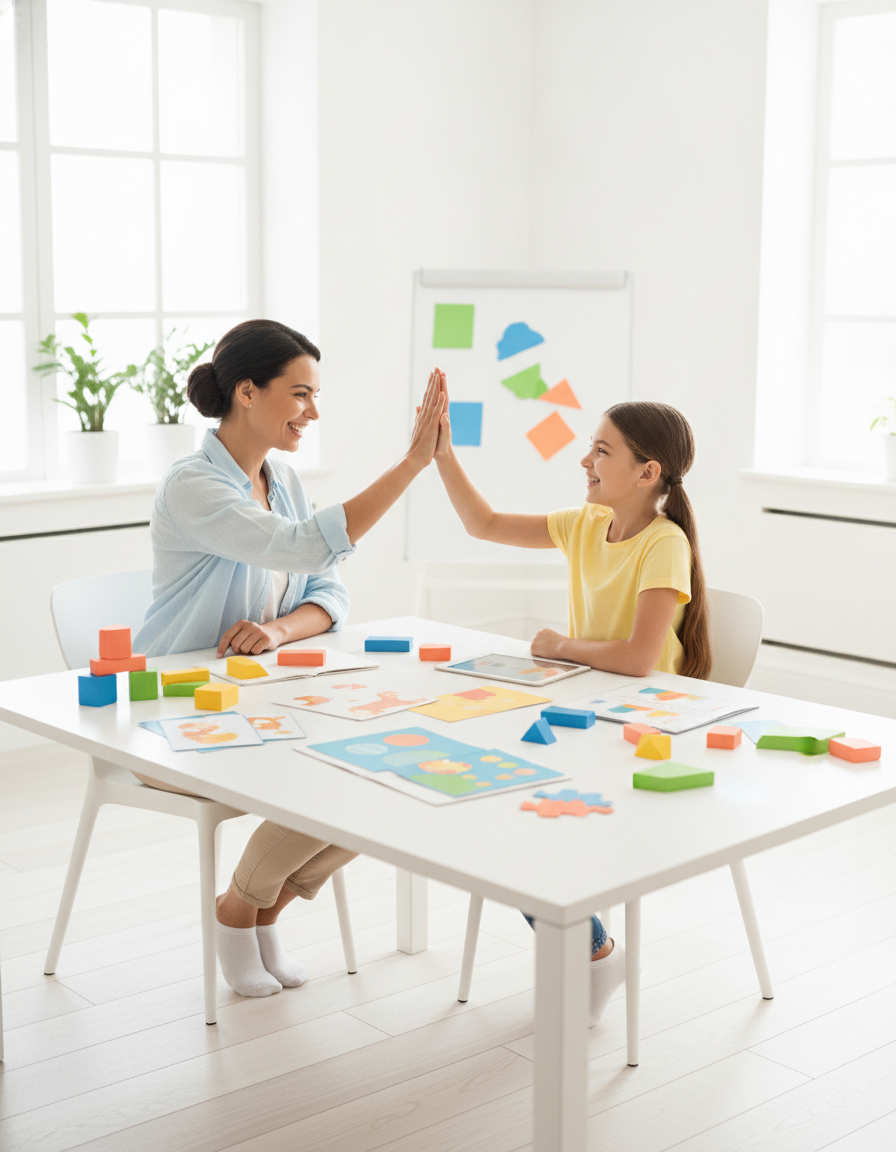
The parents who feel like the enemy are almost always the ones who care the most, which is its own kind of cruelty. What I coach them toward first is separating the two roles, the warm parent and the learning coach, so the child is not getting graded by the person she most wants to be safe with. Then we shorten the sessions and move them earlier, and we shift the language from outcome to effort. What I watch for is the moment she starts showing a parent her work without flinching. That is the relationship coming back, and the learning rides in right behind it.
Key Takeaways
Protect the relationship before the task. A child learns from someone she trusts and shuts down with someone she braces against, so connection is not separate from the teaching, it is what makes the teaching work.
Timing beats willpower. Run short sessions when the brain has fuel, before a draining afternoon depletes it, and prime with a few minutes of movement instead of demanding focus from an empty tank.
Praise effort and strategy, not outcomes or prizes. Narrating how she worked builds a learner who values mastery, while rewarding completion builds a child who works for the payout and stalls without it.
You do not need a credential to be the most important teacher your child will ever have. You already are one. The only question is whether you have the right tools.
“– Laura Lurns
The setup that keeps you the ally
Put it together into a simple routine. Pick a window when she has energy, not the dregs of the day. Start with a few minutes of movement to prime focus. Keep the session short and stop while there is still goodwill in the tank. Separate your roles out loud, the coach helps with the work and the parent is always on her side, and let her feel the difference. Narrate effort, let the hard moments breathe instead of rushing to rescue, and end on something she finished herself. If you want the language and the mindset frameworks laid out step by step, the Growth Mindset course gives you the scripts and the why behind them. You value a child who trusts you and believes in her own capacity to grow. The culture that reduces learning to grades and gold stars is working against both, and you are the one who gets to build something better at your own table. A child who struggles with one subject often carries a thread of it into others, confidence, focus, the way she talks to herself, which is why building the whole learner beats winning one homework battle. A free 7-day trial of All Access starts with an assessment and a daily plan, so the calm you are building has a structure under it.
Common questions from parents
What if my child only has energy for homework after school, when she is already drained?
Isn’t some pressure necessary, or am I letting her off easy?
I lose my patience and snap. Have I already damaged the relationship?
How do I separate the coach role from the parent role with a young child who does not get the distinction?

