

You sit beside her and the work comes together. She reads, she answers, she gets it. Then the support lifts away and within days she is back where she started, like the progress never happened. You have watched this loop enough times to dread it.
Here is what that pattern is telling you, and it is not that your daughter is lazy or that she was faking the good days. A child who performs well with help and falls apart without it is showing you something specific about where the help is landing.
Your child isn’t broken. Her brain is learning differently, and the difference between holding steady and falling apart usually comes down to one question almost nobody asks out loud.
TL;DR
- The collapse-without-support pattern means the help is doing the work in place of your child, not building the skill underneath it, so the moment it lifts there is nothing holding the performance up.
- Special education research calls the healthy version a ‘differential boost’, the right scaffold lifts a struggling learner more than it lifts anyone else, and the failure version dependence, where an easier path quietly removes the reason to build the skill at all.
- The fix is to shift from supports that compensate for the gap to short daily practice that builds the missing processing skill, so the steadiness comes from her, not from you sitting beside her.
A child who shines with help and crumbles without it is not unreliable. She is telling you exactly where the skill still needs to be built.
“– Laura Lurns
What the pattern actually means
When a child holds together with you beside her and comes undone the moment you step back, the support has become the load-bearing wall. Take it out and the structure drops. This usually points to a processing skill that has not been built yet, working memory holding too many steps at once, or attention that fades when no one is co-regulating it. The help was bridging that gap in the moment, which is why the good days looked real. They were real. They simply belonged to the scaffold, not yet to her. Cognitive processing skills like these are trainable, which is the whole reason this pattern is fixable rather than permanent.
Why more support sometimes makes the cliff steeper
It feels obvious that more help means more progress. Special education’s own research complicates that. It describes a ‘differential boost’, the right support, at the right moment, lifts a struggling learner more than it lifts anyone else. That is a scaffold doing its job. But the same body of research describes the failure mode: when a support is handed out because it is easier than addressing the actual gap, the incentive to build the underlying skill quietly disappears and dependence sets in, what researchers call learned helplessness. The accommodation was never the villain. The question is whether this particular support is building the skill or replacing the expectation that it ever gets built. That distinction is the difference between a child who needs you less each month and one who needs you exactly as much a year from now.
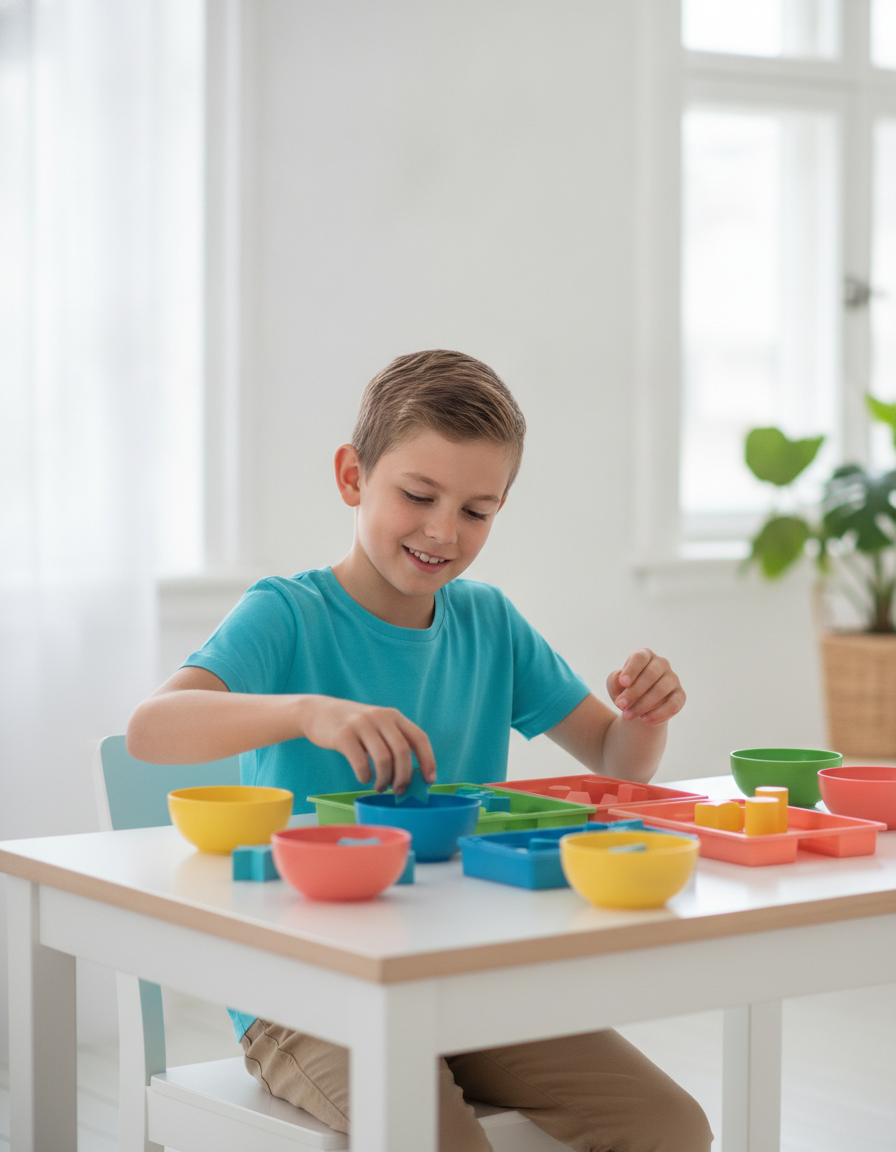
When a parent tells me their child is brilliant with help and lost without it, I do not hear a discipline problem. I hear a skill that is still under construction and a support that has quietly taken over the job. What I look for is the specific system that gives out, the working memory, the attention, the processing speed, and then I build that directly with short daily practice. The day the steadiness starts coming from the child instead of the chair next to her, everything changes. That is the moment a parent stops bracing for the collapse.
Key Takeaways
Strong-with-help, lost-without-it is a signal, not a character flaw. It tells you the support is carrying the performance instead of building the skill underneath it.
Healthy support fades over time because the child needs it less. If the need stays identical month after month, the scaffold has become a substitute, not a bridge.
Ask one question about every accommodation: is this building the skill, or replacing the expectation that it gets built? The answer tells you whether to keep it, change it, or pair it with direct practice.
The question was never accommodation, yes or no. It is whether this support is building the skill, or replacing the expectation that it gets built.
“– Laura Lurns
What to do when the support keeps doing the work
Start by naming the moment she slips. Watch one homework session and notice the exact point the wheels come off, the third instruction, the second page, the task that needs her to hold two things in mind at once. That tells you which processing skill to build. Then trade some of the propping-up for short, targeted practice on that skill, the kind that strengthens working memory, attention, and processing speed in a few focused minutes a day. The Brain Bloom program is built to develop exactly those foundations, so the steadiness starts coming from her. You value her independence, not her compliance. The system that hands out supports and calls it a day is optimizing for a quiet classroom, not a capable adult, and you are the one who gets to insist on the harder, better goal. Most children who show this hold-together-only-with-help pattern also show signs of fatigue in a second area, attention alongside reading, or memory alongside math, which is why a full picture beats a single fix. A free 7-day trial of All Access starts you with an assessment that shows which systems to build first.
Common questions from parents
Does this mean I should stop helping my child?
Is the collapse a sign she has a learning disability?
How long before she holds steady on her own?
Could she be doing this on purpose to get attention?