
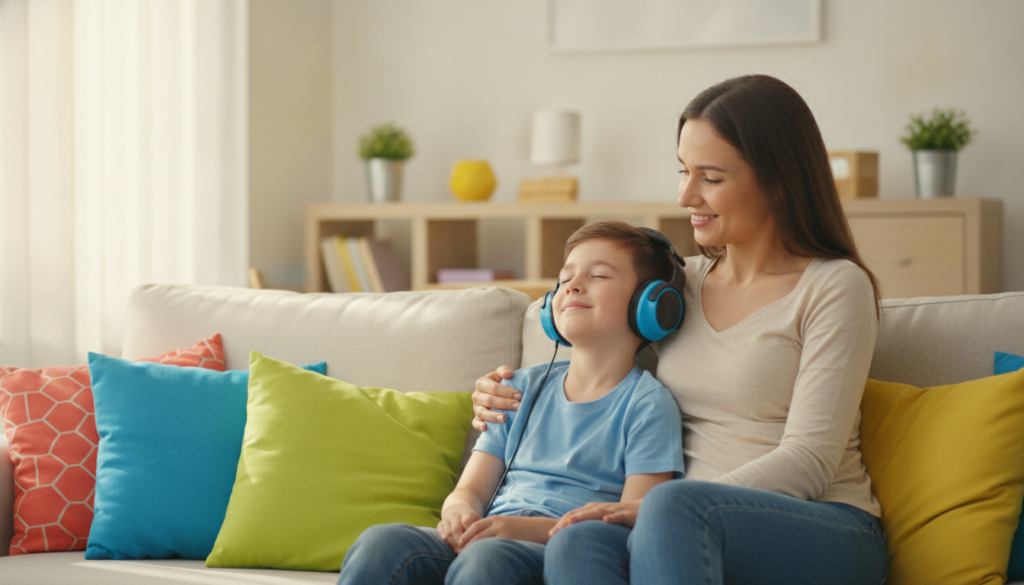
Here is something reading scientists settled years ago. Once a child gets past sounding out the words, the brain treats a story it hears and a story it reads almost the same way. The same language network lights up, and the same comprehension does the work.
That one finding turns the audiobook guilt upside down. Reading was never one skill working alone. It is several systems working together: language, attention, memory, and processing speed. A child who listens to a book above their decoding level is exercising most of that machinery, not skipping it.
So the voice telling you an audiobook is the easy way out has the biology backward. Your child is not avoiding reading. They are feeding the exact language base that every reader stands on.
TL;DR
- Audiobooks are not cheating. Listening to a book and reading it draw on the same language comprehension system, so a heard story builds the vocabulary, background knowledge, and comprehension your child needs to grow as a reader.
- Decoding and comprehension are two separate jobs. An audiobook lifts the decoding load off a struggling reader so the meaning-making half of reading keeps developing instead of stalling.
- Use audiobooks alongside short daily decoding practice, not in place of it. Listening builds the love of story and the language base, while structured phonics work builds the skill that lets your child read on their own.
Once a child gets past decoding, the brain builds meaning from a story it hears and a story it reads through the same language system.
“– Laura Lurns
What ‘Cheating’ Gets Wrong About Reading
The worry assumes reading is one single act: eyes on the page, mouth sounding out words. Reading scientists split it into two separate jobs. The first is decoding, turning letters into sounds. The second is language comprehension, turning those words into meaning. A struggling reader often has a bottleneck in decoding while their comprehension runs strong, sometimes years ahead. Hand that child an audiobook and you lift the decoding load, so the comprehension half keeps growing. Vocabulary, sentence rhythm, background knowledge, the feel of how stories work, all of it develops through the ear. Listening also strengthens auditory processing skills like holding a sequence of sounds in mind, which reading leans on too.
The Science: Listening and Reading Share a Brain
Here is where the old belief falls apart. Phonics gets treated as the whole of reading, so anything that is not eyes-on-text feels like a shortcut. Phonics is necessary. It was never sufficient. In 1986, two researchers named Gough and Tunmer described reading with a simple idea. Comprehension is decoding and language comprehension working together. Take away either one and reading breaks. An audiobook feeds the language side directly. Brain imaging backs this up. In 2019, researcher Fatma Deniz at Berkeley ran a brain-imaging study. She mapped where the brain holds the meaning of words. Listening and reading produced nearly identical maps across the cortex. The meaning your child builds from a narrator is the same meaning they would build from the page. What an audiobook does not build is decoding, and that is the part to keep practicing head-on.

When a parent tells me their child begs for audiobooks but resists the printed page, I do not hear a problem. I hear a reader whose love of story is intact while one skill catches up. What I look for is whether we are still building decoding on the side. When we protect the joy through listening and build the skill through short, structured practice, the two halves meet, and that is when a child starts reaching for a book on their own.
Key Takeaways
Reading is two jobs, not one: decoding turns letters into sounds, and language comprehension turns words into meaning. Audiobooks build the second directly.
A child whose comprehension outruns their decoding is the rule, not the exception. Listening keeps that strong comprehension growing while decoding catches up.
Pair audiobooks with short daily decoding practice. The listening protects the love of reading, and the practice builds independence.
You do not need to choose between protecting your child’s love of story and building the skill to read. The right plan does both at once.
“– Laura Lurns
What to Do at Home
Start by dropping the guilt, because it is aimed at the wrong target. Let your child listen to books above their reading level, purely for the pleasure of the story. When they are willing, follow the audio along in print. That way the eyes start pairing sound to symbol. Then protect a short, daily window for direct decoding work. You value your child’s love of reading, and you are right to guard it. The system that told you listening is cheating is the same system that labels a struggling reader and hands them a workbook instead of building the missing skill. You are the one who gets to change that. Our 5-Minute Reading Fix gives you that short daily decoding routine without the tears. But reading struggles rarely travel alone. Most children who wrestle with decoding also show signs of stretched auditory memory or working memory, and those respond to the same kind of targeted practice. A full plan builds them one skill at a time.
Common questions from parents
Will audiobooks stop my child from learning to read?
What age or level are audiobooks right for?
How different is listening from reading in the brain?
My child listens but refuses to read at all. What should I do?