

The speech therapy worked. You remember the relief of it, the day strangers started understanding your child, the sounds that finally came out clean, the sentences that grew longer and surer. So when reading stayed hard, it landed as a real surprise. If the talking came together, you reasoned, surely the reading would follow. It seemed like the same machinery. And yet here you are, watching a child who speaks beautifully stall out on a printed page.
It is a confusing, almost contradictory kind of worry. The progress was genuine, which makes the new struggle harder to place. People assume a clear talker is an easy reader, so you get puzzled looks instead of answers, and you start to wonder whether something was missed, or whether you are imagining a gap that everyone else waves off.
You are not imagining it, and nothing was wasted. Speaking and reading feel like one skill, but the brain treats them as two different jobs. Your child isn’t broken; their brain is learning differently. The talking came naturally because humans are wired for speech. Reading is not wired in at all, which is exactly why it stayed hard, and exactly why the right kind of practice changes it.
TL;DR
- Speech therapy builds spoken language, which the brain is biologically built to absorb. Reading is a separate skill the brain never evolved for, so it has to be taught directly, and clear speech does not automatically transfer into decoding print.
- Reading depends on phonological awareness mapped onto printed symbols, a connection called orthographic mapping. A child speaks fluently and still needs explicit practice building that sound-to-print link.
- This gap is common and fixable. Short, systematic, explicit reading practice that links sounds to symbols builds the exact pathway speaking does not, and the brain forms it through repetition.
Speaking and reading feel like one skill. The brain treats them as two completely different jobs.
“– Laura Lurns
Why talking came naturally and reading did not
Spoken language is what scientists call biologically primary. Humans evolved to soak it up simply by being surrounded by it, with no formal teaching required, which is why a toddler learns to talk without worksheets. Reading is biologically secondary. It is a roughly five-thousand-year-old cultural invention the brain never evolved to perform. Stanislas Dehaene’s work in Reading in the Brain shows that reading operates by repurposing circuits built for other tasks, and Maryanne Wolf summed it up: we were never born to read. So speech therapy did its job beautifully. It strengthened the natural system, the one for hearing, forming, and producing spoken words. Reading sits on top of a different arrangement, one that has to connect the sounds your child says so clearly to the printed symbols on the page. That bridge does not build itself, and speaking clearly does not lay it automatically. It has to be taught, directly and in sequence. Strong auditory processing is part of the foundation, but it is the start of the bridge, not the whole span.
The missing piece between a clear talker and a confident reader
Here is the belief that quietly traps families: reading develops naturally, the way talking does, so a verbal child should read on their own. It does not. David Geary’s framework on primary versus secondary knowledge, Dehaene’s brain research, Mark Seidenberg’s work, and the National Reading Panel all converge on the same conclusion: reading must be explicitly and systematically taught. The specific bridge a strong talker still needs is called orthographic mapping, the brain’s process of bonding the sounds in a spoken word to the letters that spell it, until the printed word is recognized instantly. Speech therapy built your child’s sound system. Reading practice has to take those sounds and anchor them to print, one pattern at a time. When a clear talker struggles to read, this bridge is almost always where the work lives, and it responds to short, explicit, sound-to-symbol practice. That is not a failing in your child. It is the next, teachable step, and it is one most schools still under-teach.
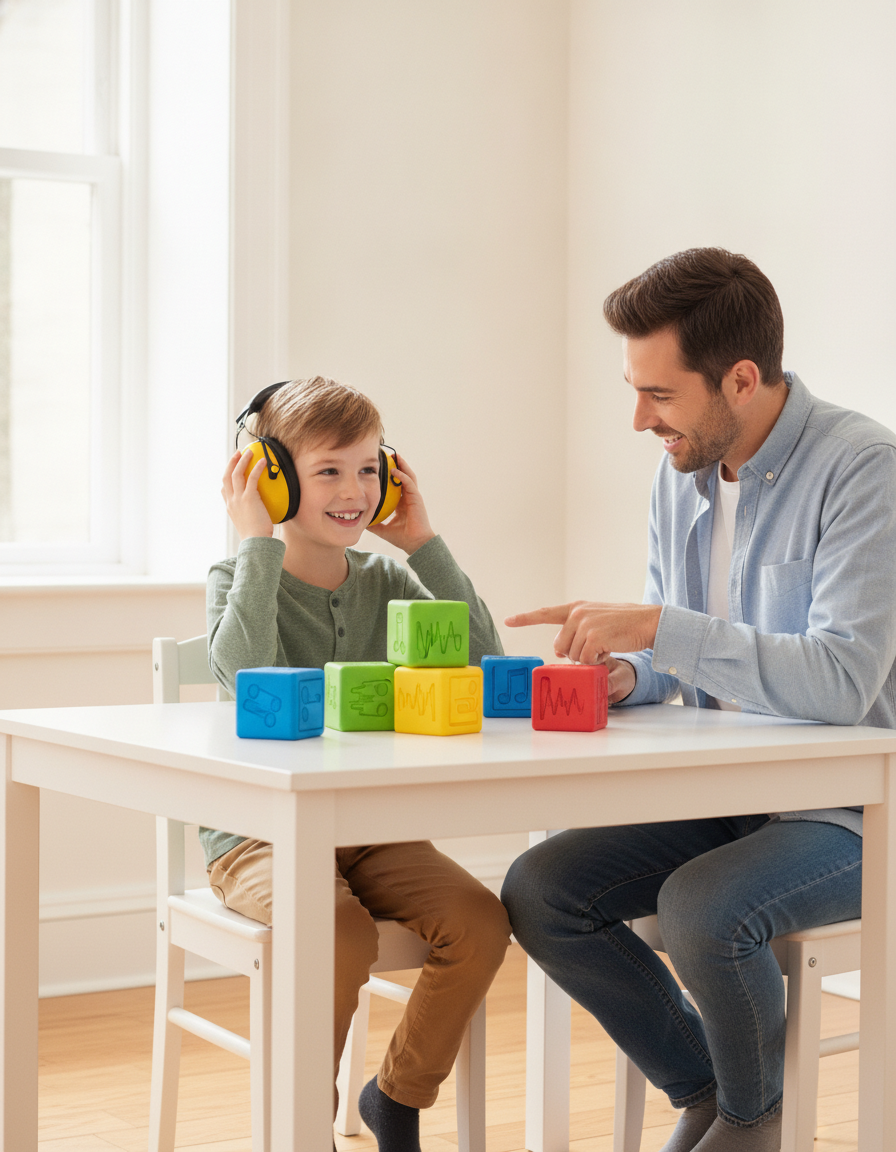
When a family comes to me confused that their articulate child struggles to read, I am usually relieved, because it tells me the oral language foundation is strong, and that is a wonderful place to build from. What I look for next is the bridge between sound and print, the orthographic mapping, because that is the piece speech therapy was never designed to build. The good news I get to give these parents is that their child already has the raw material. We simply have to connect it to the page, deliberately and in small daily doses, and a verbal child often catches on fast once the practice finally targets the right link.
Key Takeaways
Speaking and reading are different jobs in the brain. Spoken language is wired in and absorbed naturally, while reading is an invention the brain never evolved for and has to be taught directly.
The bridge a verbal child still needs is orthographic mapping, the bonding of spoken sounds to printed letters. Clear speech does not build it automatically, but explicit practice does.
A clear talker who struggles to read is a common and fixable pattern. Short, systematic, sound-to-symbol practice builds the exact pathway that speaking alone leaves unbuilt.
Your child already has the raw material in their voice. Nobody is better placed than you to connect it, one small daily step, to the printed page.
“– Laura Lurns
How to build the bridge at home
Aim the practice at the link itself. Short, daily, explicit work that takes the sounds your child already produces and ties them to printed patterns, a few minutes at a time, ending on a success. Keep it sequential, one pattern mastered before the next, and let the speaking strength carry the load: say the sound, find it in print, blend it, repeat. You value being the one who helps your child build real skill rather than waiting on the next referral, and you have run into a system that assumes a clear talker reads on their own and quietly under-teaches the bridge that does not build itself. That gap is the villain, not your child. The Learning Success 5-Minute Reading Fix is designed for exactly this: short, parent-led practice that connects sound to symbol and is built to end in success. And because reading rests on several systems, a verbal child sometimes still has gaps in auditory processing or visual tracking that an assessment surfaces, so the All Access Program looks at the whole child. Start your free 7-day trial and build the bridge between the voice you love and the page.
Common questions from parents
If speech therapy worked, why is my child still struggling to read?
Does my child have dyslexia, or is this something else?
Will the speech therapy gains help with reading at all?
How much practice does building this bridge take?