

There is a thought a lot of parents have and almost none say out loud: maybe she is putting it on. The confusion looks too convenient. She had this material yesterday, and the blank stare arrives at the exact moment the hard thing does.
Having that thought does not make you a bad parent. It makes you a confused one, and the confusion is fair. Your child is not broken, and you are not broken for wondering. A real gap in understanding and a performed one look identical from across the table, and you will not sort them out by watching.
Here is the piece that changes the question. In our work with families, under nearly every one of these standoffs sits a task that once felt unsafe to try. Find that, and ‘is she stupid or is she stubborn’ stops being the question worth your energy.
TL;DR
- From the outside, a real gap in understanding and a child putting the confusion on look the same. You will not tell them apart by watching, because the difference sits on the inside.
- In our experience the avoidance almost always started as a real response to a task that felt too hard, even after it hardened into a habit.
- So the question that helps is not ‘is she faking?’ It is ‘what made this feel unsafe to try?’ That one points at something you are able to change.
A real gap and a performance look exactly alike from the outside. That is not a failure of your parenting. It is an honestly hard thing to read.
“– Laura Lurns
What ‘acting stupid’ almost always turns out to be
To us, what most parents describe does not look like a child who has stopped trying. Here is why the blank look is so convincing. When a task lands on something a child finds genuinely hard, the quickest way out of that discomfort is to check out. Do that enough times and it turns into a reflex, fired before she even knows she is doing it. She is not deciding to fool you. She is protecting herself from a moment that has felt bad before. Underneath it sits a real part of the work that is not solid yet. It might be following a run of spoken directions. It might be keeping her place along a line of print. It might be holding a sentence in her head long enough to get it down. None of those is a verdict on how bright she is. The way back usually starts with rebuilding her sense that she is capable, one small and real win at a time.
The lazy story falls apart the moment you look at it
There is an old idea that a bright child who struggles must be choosing not to try. For years the experts leaned on a version of it, defining a reading difference as a surprise, something you would not expect given how sharp the child seemed. That framing is on its way out. In 2025 the International Dyslexia Association rewrote its definition and removed the old line about the difficulty being unexpected next to a child’s other abilities. Researchers who examined that discrepancy approach, Catts and colleagues in 2026, reported that measuring a learning difference against IQ lacks predictive validity. In plain terms, it does not tell you what people long assumed it did. Said plainly, being smart and finding a school skill hard were never opposites. A capable child who hits a wall is the ordinary picture, not a puzzle you have to solve by blaming her attitude. What she needs is not a lecture about effort. It is evidence, banked one small win at a time, that she is able to do the thing that scared her.
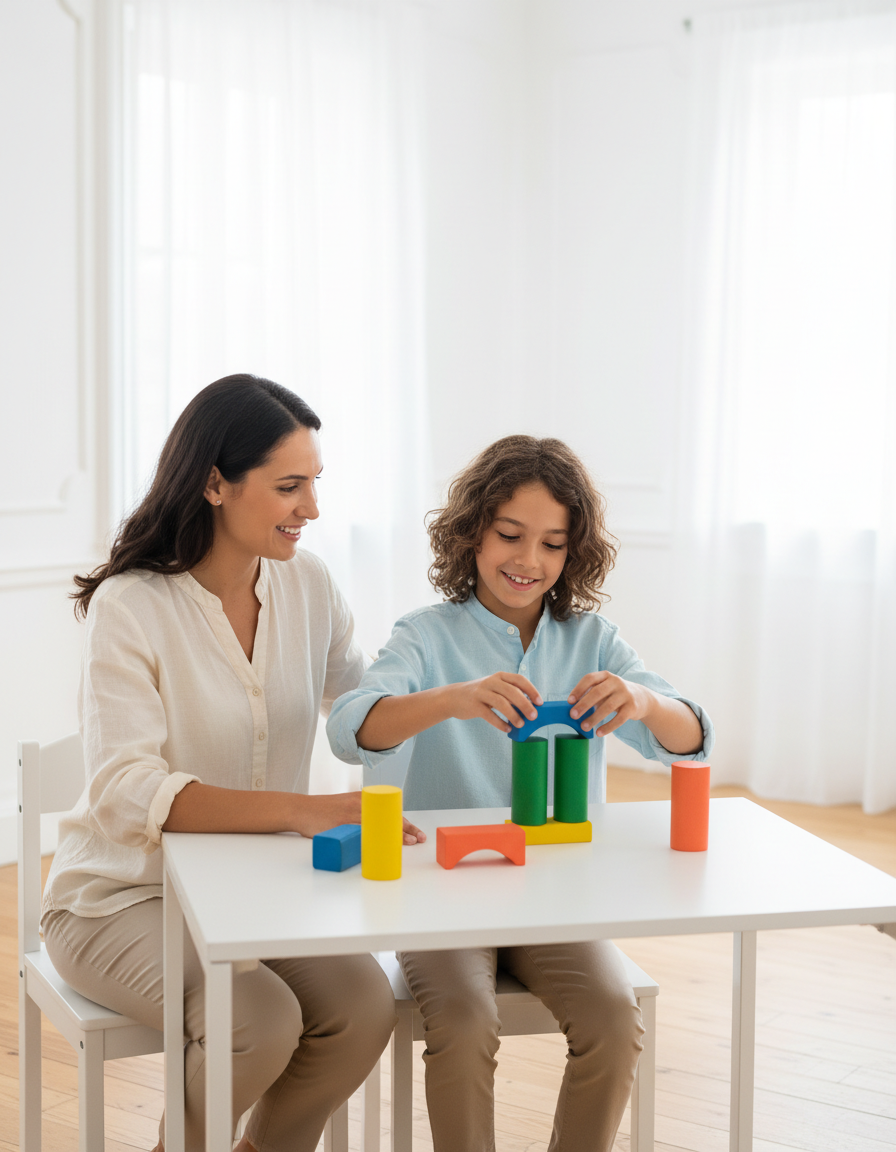
When a parent tells me their child is being lazy, I ask what the task looked like in the minutes right before the shutdown. Almost every time, there is a specific thing inside it that the child has not been taught to do yet. We find that thing, we build it, and the laziness tends to quietly go away, because it was never the real story. What I look for is not effort. It is the small missing piece underneath the effort.
Key Takeaways
You are not able to tell a real gap from a performance by watching. The difference lives on the inside, so stop grading yourself for missing it.
What we see, over and over, is avoidance working as self-protection, not defiance. Under it sits a task that felt too hard, and that is something you are able to help with.
Smart and struggling were never opposites. A capable child hitting a wall is the ordinary picture, not proof of a bad attitude.
Your child is not choosing to fail. She is shielding herself from a moment that has hurt before, and that is something you are able to help her rewrite.
“– Laura Lurns
What to do the next time the blank look shows up
The next time the wall goes up, set aside the question of whether she means it. Get curious about the task instead. Back up to the last step she did with ease, and start there. Make the next step small enough that she is not able to miss it, then let her feel herself get it right. You are not lowering the bar. You are finding the exact spot where the ground got shaky and rebuilding it one sure footing at a time. You know this child better than any worksheet ever will. That matters, because a system that is quick to file a struggling kid under ‘lazy’ or ‘behind’ is a system that has stopped looking for the real cause. No one will ever advocate for your child as hard as you will. That is not a flaw in the system, it is true of every system there is, and it is exactly why your read of her counts. Learning leans on more than one system at a time. A check pointed at a single skill will not tell you whether something else is riding along. It might be how she gets started on hard work. It might be how she talks to herself when she is stuck. The seven-day All Access trial opens a set of tools built around the whole child, not one fix aimed at one symptom. It is a way to see the fuller picture and to start in language that builds her up instead of boxing her in. Start the seven-day All Access trial and begin with the whole child in view.
Common questions from parents
How do I tell if my child is faking it or genuinely stuck?
Is she doing this because she is lazy?
Should I get her screened or tested for a learning difference?
Why does she seem to know it one day and not the next?

