
You Know Something’s Harder Than It Should Be. But Which Thing?
You’ve watched your child struggle with schoolwork you know they’re bright enough for, and you’ve probably already met the standard advice: more phonics, more practice, more patience. Maybe you’ve tried a program or two. And still the question underneath never got answered — what, exactly, is making this hard?
Here’s a way of thinking about it that changes what you do next. Reading, writing, and math are outputs. Underneath them sits a layer of smaller skills the schoolwork runs on — telling similar sounds apart, holding a sequence in mind, picking one voice out of background noise, recognizing a word from a glimpse of it. When one of those is still developing, the schoolwork costs your child more than it costs the kid next to them. And because everyone is looking at the output, the layer underneath almost never gets checked.
Cognitive Micro-Skills – An Introduction is the course that checks it — with you and your child exploring it together.
TL;DR
- Fifty-six short, interactive exercises across visual and auditory processing skills — done together, parent and child, a few minutes at a time.
- You come out knowing which skills come easily and which take effort — which tells you where to start, without hanging a label on your child.
- It’s part of All Access, where every skill you discover has a full program behind it — plus a personalized roadmap. Seven days free.
Exploration, not examination
This isn’t a test, and your child will be able to tell. Each section takes one processing skill, explains it in plain language, and hands the two of you a short exercise to try. Some your child will breeze through. Others will take real effort — and a few of those will surprise you, because the skill costing your child effort is often one nobody ever thought to look at.
There are no scores and no labels. What you get instead is the thing labels never give you: a direction. The exercises that take effort are your answer to “where do we start?”
Your child isn’t broken — their brain is learning differently. The job is to find out which skill to build first.
“– Laura Lurns
Built to be done together — which is why families finish it
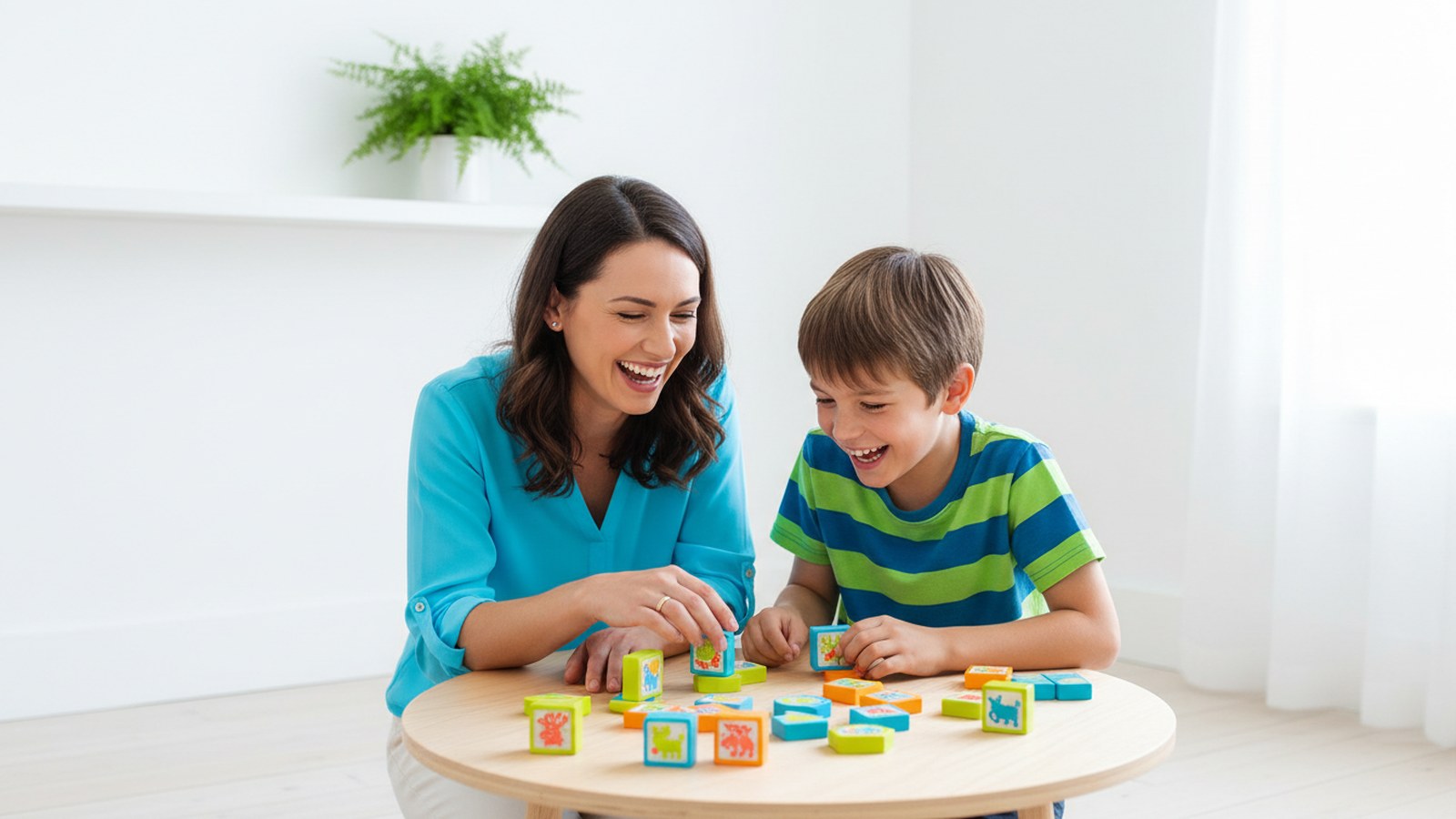
Most programs send your child off to a screen and hand you a dashboard. This one puts you in the room, taking turns, laughing at the exercises that turn out to be hard for you too. That’s deliberate. Your encouragement is the most powerful motivator in your child’s learning life, and a course built around it gets finished — and enjoyed — in a way solo programs rarely are.
“One child says they NEED to start their home school day with the exercises, since it makes her other work easier.” — Lynn Winkler
“In a bit over two weeks, she would ask for the exercises before she had to read or wanted to write.” — Leigh Spector
Individual parents describing their own child, in their own words — not a measured result, and not a pattern we claim across families. We publish no aggregate success figures.
Every door this course opens is already yours
This introduction samples the skill areas. All Access holds the full program behind each one: the Echo Me listening ladder in Attentive Ear, the visual closure and sight-word courses, rhyming and sound-discrimination work, movement and coordination courses, confidence and emotional intelligence work in Brain Bloom, the 5-Minute Reading Fix for direct reading and spelling practice, and number sense courses for math. Whichever skill turns out to need building first, you already own the course that builds it.
And you don’t have to sequence it alone. All Access includes an assessment — a series of questionnaires about what you’re seeing at home, about forty-five minutes, asking across every processing system. Within 48 hours of your finishing, your child’s personalized roadmap arrives as a PDF: which skill to build first, which program builds it, and what follows. It’s yours to keep. (Forty-eight hours is how long the document takes to reach you — not a timeline for your child.)
A screener is a starting point, not a diagnosis. If your child might need formal accommodations (an IEP or 504 plan), or you suspect a vision, hearing, or medical cause, pursue a professional evaluation too — that’s the only route to those supports.
Common questions from parents
Is this a test or an assessment of my child?
What ages is it for?
How much time does it take?
Do I need a diagnosis first?