

The choice landed on the kitchen table like a bill no one warned them about. Keep her in the Spanish immersion program she loved, or pull her out to get the reading help the school would not give inside it. They were told to wait and see. Perhaps it was only the second language.
It was not only the second language. A reading difficulty does not live in Spanish or in English. It lives in how the brain maps the sounds of language onto symbols, and that shows up in every language a child learns. The immersion program did not cause it, and it was never going to hide it for long.
What the waiting cost her was time. Not her intelligence, not her future, time. And time, unlike a diagnosis, is the one thing a good plan starts giving back.
TL;DR
- A reading difficulty shows up across every language a child speaks, because it lives in how the brain maps sounds to symbols, not in Spanish or English. Immersion did not cause it.
- Wait and see is the costly part. The delay let an underlying gap go unaddressed while the calendar kept moving, which is exactly what early intervention exists to prevent.
- The lost ground is real and it is recoverable. The brain keeps rewiring with the right kind of practice, so the next step is finding the actual skill gap and aiming there.
A reading difficulty does not live in Spanish or in English. It lives in how the brain maps sound onto symbol.
“– Laura Lurns
Why the second language was never the real story
The school’s logic sounds reasonable on the surface. A child learning to read in two languages stumbles, so surely the second language is the culprit. The reading science says otherwise. Reading rides on phonological processing, the brain’s ability to hear and sort the individual sounds inside words, and that machinery is shared across languages. A child who struggles to connect sound to symbol struggles with it in Spanish and in English, because it is the same underlying system doing the work. Bilingual children are not more prone to reading difficulty, and immersion does not create it. What immersion did was hand everyone a convenient place to point while the real gap waited. To see the systems underneath, our overview of dyslexia lays out what reading actually asks of the brain.
The cost of wait and see
Here is the part that should make every parent angry. Wait and see is not a neutral position. It is a decision to let a gap widen while a child keeps falling behind the peers reading beside her. The International Dyslexia Association moved its 2025 definition toward early, multi-system intervention for a reason: the earlier the right practice starts, the less ground there is to recover. And recoverable is the right word. Brain-imaging research from Yale and Stanford shows children with reading difficulties build the same reading pathways as typical readers after focused intervention. A reading difficulty describes where your daughter is today. It does not predict where she lands after a year of the right kind of practice. The school framed it as immersion against reading help. The honest frame was always early help against lost time.
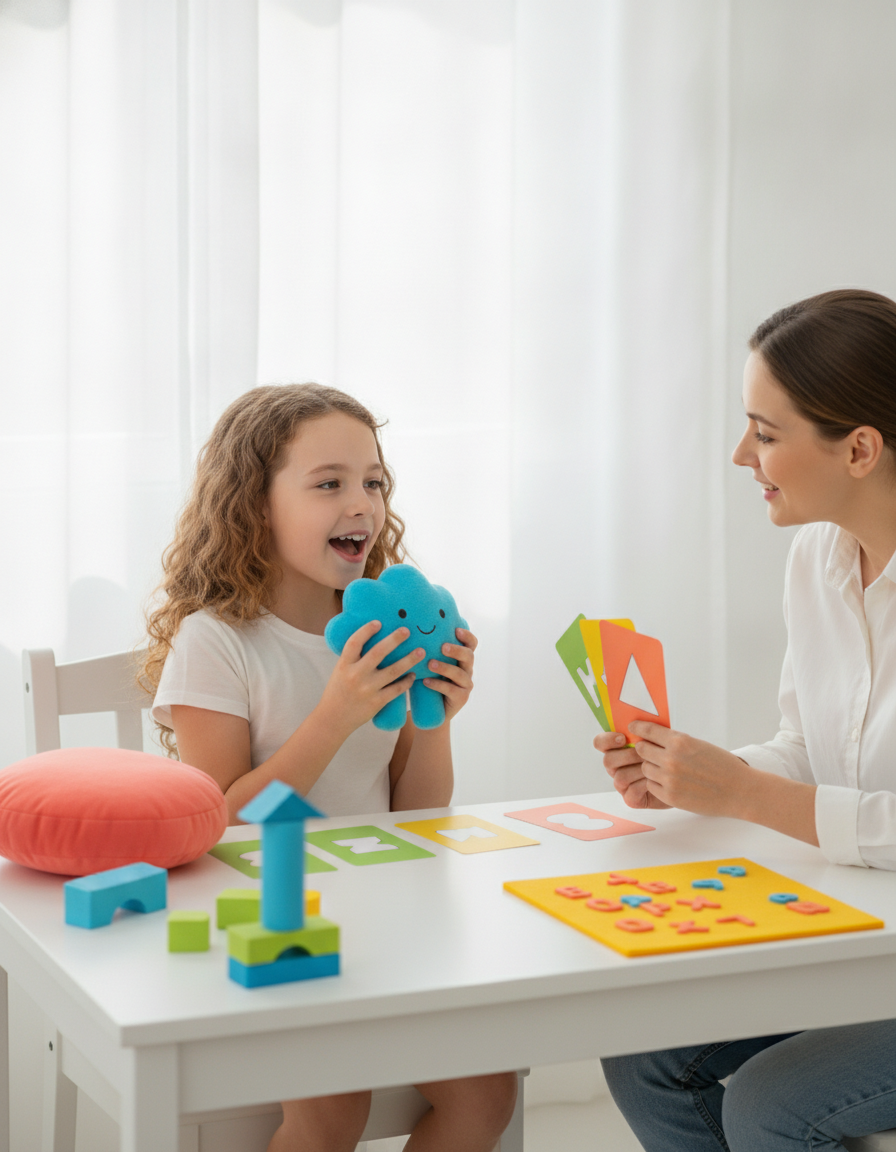
When a bilingual child struggles to read, I watch families get told to drop the second language first, as if that were the problem. It almost never is. I look at the sound-processing system underneath, because that is what reading is built on, and it is the same in any language. The heartbreak is the wasted months. The hope is that the right practice closes the gap faster than parents expect.
Key Takeaways
A reading difficulty travels across languages, because it lives in the brain’s sound-processing system, not in any one language. Immersion does not cause it and does not hide it for long.
Wait and see is the expensive choice. Every month of delay is ground a child has to recover later, which is why early intervention matters so much.
Lost time is recoverable. The brain rewires with the right kind of practice, so the move now is to find the real skill gap and aim practice there.
The school called it immersion against reading help. The honest choice was always early help against lost time.
“– Laura Lurns
What to do now, in either language
Start where the reading science starts, with the sounds. Short, daily, focused practice on connecting sound to symbol does more than another year of waiting, and it works whether your child reads in English, Spanish, or both. Our 5-Minute Reading Fix gives you that daily structure in pieces small enough to actually keep up with. You value a child whose love of two languages was never the thing holding her back, and the system that made you choose between her bilingual world and the help she needed is the one you get to overrule, starting now. Because reading struggles rarely arrive alone. A child stalled in decoding often shows signs of weak working memory or slow processing speed too, and a plan that sees the whole profile moves faster than a single fix. The All Access Program assesses all of it and builds a 12-week plan, and you begin with a free 7-day trial.
Common questions from parents
Did Spanish immersion cause my child’s reading problems?
Should I pull my child out of the immersion program?
We waited a year on the school’s advice. Did we ruin her chances?
How do I tell a reading difficulty from a normal second-language lag?