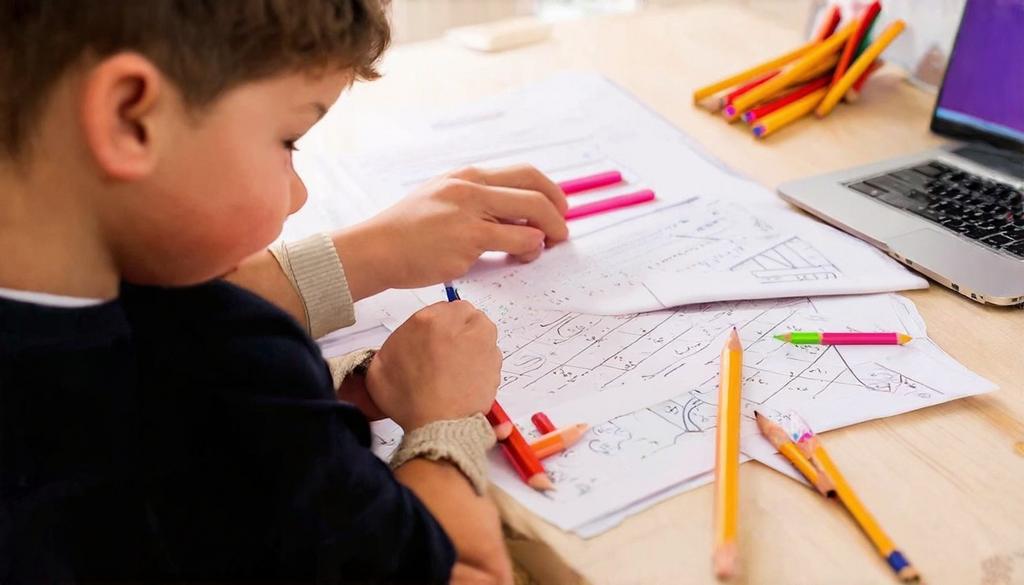
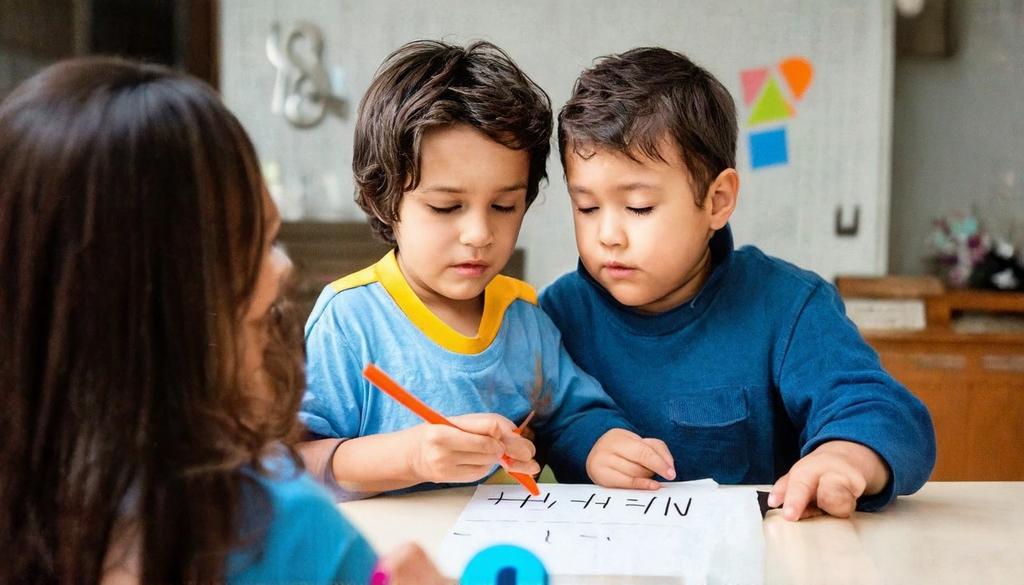
Is my child simply not a math person? It is the kind of question a parent types into a search bar late at night. Part of you half hopes the answer is yes. A settled verdict would at least end the nightly fight over homework.
Here is the trouble with that verdict. “I am not a math person” is not a description of where a child stands. It is a prediction the child is making about their own future. Our experience is that children act on the predictions they make about themselves. A child who has decided the door is closed stops pushing on it, and the closed door starts to look like proof.
The premise itself is wrong. Math is not a talent a child is handed at birth or denied. It is a set of skills, built in a sequence. What looks like a missing gift is far more often a missing step.
TL;DR
- No child is born a “math person” or locked out of math. Math is a set of skills, built in sequence through clear instruction and practice. The belief that the ability is fixed is one of the things that most reliably stops a child from building it.
- A genuine math difficulty is a specific thing. Developmental dyscalculia is a difference in how the brain processes quantity. It affects roughly 3 to 7 percent of people, depending on where the line for difficulty is drawn, and it is unrelated to intelligence. It responds to targeted, concrete teaching.
- Math anxiety is different again: a learned fear that drags on performance even in children who understand the work. Higher math anxiety travels with lower math attainment across a synthesis of more than 900,000 people (Caviola and colleagues, 2022). That link is a correlation, not a cause. Address the feeling and the skill together rather than waiting for one to fix the other.
“Not a math person” is not a fact about your child. It is a conclusion they reached from their own evidence, and new evidence is the only thing that overturns it.
“– Laura Lurns
Where the “Math Person” Myth Comes From
The idea that people split into math people and non-math people is one of the most widely repeated beliefs in education. It is handed down with the best of intentions. A parent says “I was hopeless at this too” to comfort a stuck child. A teacher reassures a family that not everyone is wired for numbers. The child hears something the adult did not mean: that the outcome is settled, so effort is pointless. What gets lost is that math is not one ability you either have or lack. It is built from a handful of separate skills, and they develop at different rates. A wobble in any one of them looks, from the outside, like a child who does not get math. The ground floor is number sense: a feel for quantity, for which amount is bigger, for how numbers come apart and fit back together. A child who never got that foundation solid is not missing a math gene. They are missing a specific, teachable skill that the rest of math is built on. Name the missing step and you have something to work on. Name the child a non-math person and you have nothing left to do but give up.
What Is Actually Going On When Math Is Hard
When math is a genuine struggle, there is almost always a specific reason. “This child is not a math person” is never one of them. Sometimes the reason is a foundational skill that was never built. Sometimes it is developmental dyscalculia, a difference in how the brain handles quantity and number. Dyscalculia is specific and well described. What a parent actually sees is a child who counts on their fingers long after classmates have stopped. They have no feel for estimation. The idea of “bigger” and “smaller” stays genuinely slippery. It affects somewhere between 3 and 7 percent of people. The exact figure depends on where the line for difficulty is drawn. It often sits alongside strong ability in other areas, so intelligence is not the issue. Butterworth and colleagues (2011) trace dyscalculia to the way the brain handles quantity, and report that targeted, adaptive teaching strengthens that same skill. It is a difference that answers to instruction, which is the opposite of a fixed ceiling. A third thing wears the same disguise, and it is the most common of the three: math anxiety. This is a learned fear response to math. It drags down performance even in children who understand the material perfectly well. Young, Wu and Menon (2012) found that in children, math anxiety lit up the brain’s fear circuitry while quieting the regions used for reasoning. Read that carefully. The picture shows fear getting in the way, not an absence of ability. And the link holds at scale. The largest synthesis of how math learning works pooled more than 900,000 people. It found that higher math anxiety travels with lower math attainment (Caviola and colleagues, 2022). That is a correlation rather than proof of cause, and the researchers say so plainly. But it means a child’s dread is worth taking seriously in its own right. It is not nerves that will pass once the grades improve.
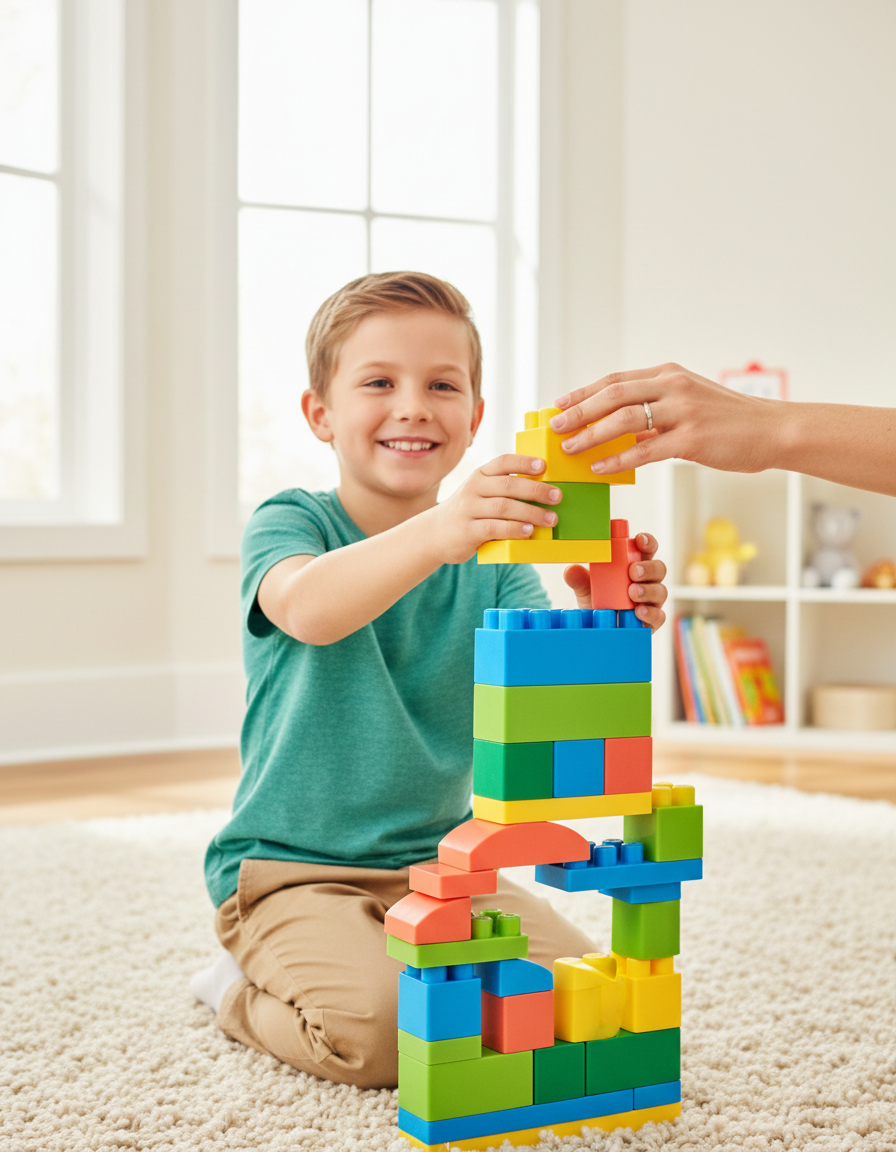
When a parent tells me their child is “not a math person,” I hear something specific. I hear a child who hit one wall and drew a sweeping conclusion from it. In twenty years I have never met a child with no capacity for math. I have met plenty who were missing an early skill nobody went back to teach. I have met plenty more who were so braced for failure that they could not think straight. Find the missing skill, lower the fear, and the “not a math person” story quietly falls apart.
Key Takeaways
There is no such thing as a “math person” or its opposite. Math is a sequence of teachable skills. A child who struggles is almost always missing a specific step rather than a general gift.
A real math difficulty has a name and a shape. Dyscalculia affects roughly 3 to 7 percent of people, is unrelated to intelligence, and responds to concrete, systematic teaching. It is a difference to work with, not a ceiling to accept.
Math anxiety is a separate problem that looks identical from the outside. Address the fear and the skill at the same time. Teaching a frightened child harder does not reach the fear. Reassuring a struggling child does not build the skill.
A diagnosis describes where your child is today. It does not predict where they will be after a year of the right kind of practice.
“– Laura Lurns
What to Do Instead of Accepting the Verdict
You want two things. You want your child to stop believing they are broken at math. And you want to know what to do about it on an ordinary Tuesday. The system most families meet delivers neither. It is quick to sort a child into a category and slow to hand a parent anything to do. So you wait for an appointment while your child keeps collecting evidence for the belief you are trying to dislodge. A diagnosis describes where your child is today. It does not predict where they will be after a year of the right kind of practice. Nobody will advocate for your child the way you will, and you do not need a credential to start. What you need is an honest read of this one child: which skill is the missing step, and whether fear is sitting on top of it. Begin at home by shrinking the daily experience of failing. Aim for fewer, shorter, better-pitched math moments, kept apart from any mark or test. Then being stuck comes with a next step instead of a verdict. But a math struggle rarely travels alone. A child who finds math hard often carries more than one thing at once: an attention difficulty, a knock to their confidence, or the math anxiety we talked about. A plan aimed at only one of those leaves the others in place. That is why the answer is a full set of tools for the whole child rather than a single fix. You answer questions about what you are seeing across every processing system. The roadmap that comes back names which skill to build first, and in what order. These tools are worked alongside your child’s math instruction rather than in place of it. Start your free 7-day trial and find out what this one child needs, so you stop arguing with a verdict and start building the thing underneath it.
Common questions from parents
How do I know if my child has dyscalculia or is behind in math for another reason?
Is it too late if my child already hates math and calls themselves bad at it?
Should I tell my child I was never a math person either, to make them feel better?
Does math anxiety mean my child will always be bad at math?