

The verdict comes fast, and it is almost always the same. He could do the work if he wanted to. A child who says I need help before looking at a single line looks, from across the table, like a child who will not try.
Watch the timing, though. The words arrive before the first attempt, not after a real one. That is the shape of a child protecting himself from a feeling, not ducking the work. The feeling is the sting of being wrong one more time, and asking for help first means he never has to meet it.
I am bad at this is not something your child read off the page. It is a prediction he is making about what happens next. Every time he hands the task away before trying, that prediction gets a little louder. Your child is not broken, and the reflex is not a character flaw. It is a pattern built over a lot of hard days, and patterns built by practice come apart by practice too.
TL;DR
- When a child asks for help before trying, it is almost always a protective reflex, not laziness. The brain is ducking the feeling of being wrong again, not the work itself.
- Rescue too fast and the pattern hardens. Hand back the smallest first step instead, so your child collects proof that he handled something hard.
- Respond to effort and strategy, not speed or being smart. Effort-based feedback is what rebuilds the willingness to begin.
A child who asks for help before trying is not ducking the work. He is ducking the feeling of being wrong again.
“– Laura Lurns
Why the shutdown comes before the first try
Picture the math sheet that has gone sideways three evenings in a row. By the fourth evening, your child’s brain has drawn its own conclusion about that sheet. This is where I come apart. So it moves early. Reaching for help before the first step is the brain skipping past the part that stings. Some people call this pattern learned helplessness. We use the phrase with care. It names something we watch happen in families, not something a study has pinned down, and it describes a pattern rather than a flaw in your child. Here is what we see. The reflex shows up most in the children who have tried the longest and lost the most ground. That is the reverse of the lazy story it usually gets told as. Underneath it sits a quiet loss of confidence, the kind built from proof of handling hard things, not from being told you are smart. Rebuild that proof one small step at a time, and the reflex has less work to do.
The lazy label, put on trial
So let us take the lazy verdict seriously for a moment, then answer it. Calling a struggling child lazy assumes the effort is missing. To us, the timing says otherwise. A child who had quit on effort would not feel the dread that makes him reach for help in the first place. The dread is the effort, rerouted. What he has lost faith in is not trying. It is trying and still being wrong. This is where how you respond matters more than most of us were taught. In a well-known 1998 experiment, Carol Dweck and Claudia Mueller gave fifth graders a set of problems, then a failure they had engineered. The children praised for their effort kept working at the harder problems. The children praised for being smart backed away from them. The lesson for a parent is small and practical. Praise the effort and the strategy your child used, not how fast or how clever he was. That leaves him somewhere he is willing to come back to. For the exact words, our growth mindset guide for parents lays the effort-first scripts out in order.
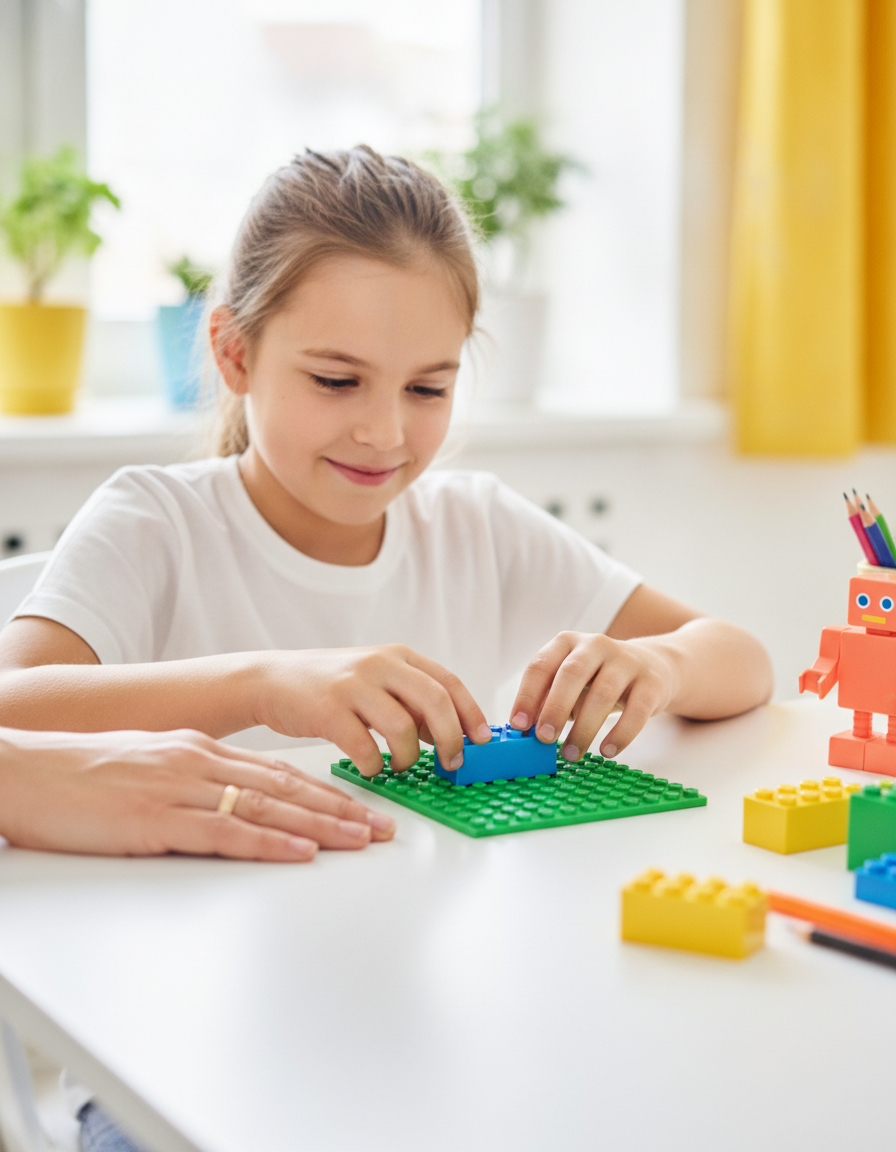
When a parent tells me their child gives up before starting, I do not picture a lazy kid. I picture a child bracing against one more wrong answer. So the first thing I change is the size of the first step, until starting feels safe again. Then I name the effort out loud, every time. Not the speed, and not how clever the answer was. What I am after is simple. I want the child to collect proof, in his own hands, that he is someone who begins.
Key Takeaways
Asking for help before trying is a protective reflex, not a character flaw. It grows from too many hard days, not from too little willingness.
Shrink the first step until starting feels safe. Proof that he handled something hard is what rebuilds the willingness to begin.
Respond to effort and strategy, not speed or being smart. What you praise is what your child learns to protect.
You are not raising a child who quits. You are teaching a brain that it is safe to begin.
“– Laura Lurns
What to do at the kitchen table tonight
Start smaller than feels reasonable. Pick the first tiny move. Reading the problem out loud, or pointing to where the question begins. Ask your child to do only that, and nothing more. When he does it, name it out loud. You started, and it was hard, and you started anyway. Then hold the answer back one beat longer than is comfortable, and let him surprise himself. You are not handing him the solution. You are handing him proof. What you want is not a child who finishes the worksheet. It is a child who believes he is the kind of person who begins. The system he is caught in would rather hang a label on him and move on. That label is a tidy word for the freezing, and it never teaches him how to start. You are the one doing the harder, better thing, night after night. And every time a session ends with him saying I did it, the prediction he was making about himself gets quietly rewritten. When starting is this hard, we look at more than willpower. The attention it takes to begin. The working memory that holds the steps in place. The confidence that it is safe to be wrong. Our assessment asks about all of them, and turns what you answer into a plan you start this week. The free seven-day All Access trial is where it begins.
Common questions from parents
Is my child being manipulative when he asks for help before trying?
How do I tell this apart from my child truly needing help?
Does giving help make it worse?
Could this be anxiety rather than a learning problem?