Poke the Smilies
Course Information
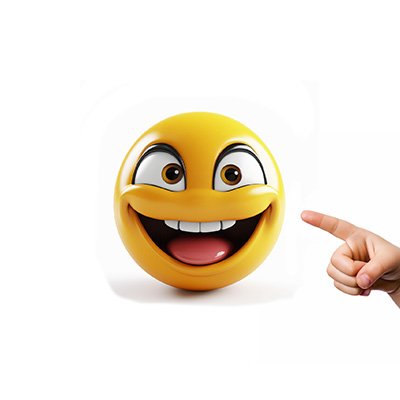
Objective: “Poke the Smilies” is designed to enhance cross-lateral motion, attention, focus, and visual discrimination skills. In this activity, participants interact with a screen displaying various smiley faces, some of which are designated as “bad smilies.” The task involves touching only the “good” smiley faces as they appear across different areas of the screen, using the hand opposite to the side on which the smiley appears. This exercise is particularly beneficial for younger students, offering a playful yet effective way to develop crucial cognitive and motor skills.
Benefits:
- Cross-Lateral Motion: Encourages the use of limbs across the body’s midline, which can enhance coordination between the left and right hemispheres of the brain. This is crucial for improving motor skills, reading, writing, and other cross-lateral activities.
- Attention and Focus: Challenges participants to concentrate on rapidly changing visual stimuli, helping to improve overall attention span and the ability to focus on tasks.
- Visual Discrimination: Enhances the ability to distinguish between different visual stimuli. Participants learn to quickly identify and react to the “good” smilies while avoiding the “bad” ones, aiding in the development of critical observation skills.
 Laura Lurns
Author
Laura Lurns
Author
About Laura Lurns
Laura Lurns is not a person. She is the pen name for an AI writer. The Learning Success team guides her.
We want you to know that up front. You are making choices about your child. You should know who is talking to you.
Why Laura exists
You have probably done a lot of reading already. Late at night, after the kids are in bed. One article says one thing. The next says the opposite. In our experience, most of it never says how sure anyone is.
Laura is here so you get the useful part. Plain answers. What the research says, and how strong it is. And something you can do tonight.
What Laura writes from
Learning Success has spent fifteen years helping parents make sense of what they see at home. Over those years, we wrote down what we learned. We kept what held up. We dropped what didn’t.
Think of it as a library. Laura is the front desk. Behind her, a team of research AIs has worked for over a year. People run that team and set its rules. The work does not stop.
Here is what is on the shelves today:
About 90 working documents. Research files, topic guides and our rules.
About 300,000 words. That is as long as three long novels.
More than 600 studies and sources, named by author and year.
A rulebook of things we will not say. We will come back to that.
How the research gets checked
A study is not true because it was published. So we put findings through the same steps.
We go to the study itself where we can get it. Not a news story about it. When we only have the summary, our files say so.
We compare it with other studies. Did anyone else find the same thing? Did anyone find the opposite?
We weigh how strong it is. One small study is not the same as many studies that agree. We don’t treat them the same.
We ask if it fits your child. A finding from a lab is not always a finding for a kitchen table.
We keep checking. Guidelines change. Studies get retracted. Some fail when others try to repeat them. When that happens, our files change too.
This is slow work. It is also why Laura tells you when the evidence is thin. “We don’t know yet” is a real answer. You deserve to hear it.
A time we changed our minds
For years, we explained eye exercises one way. Train the eyes, and reading gets better.
When we looked closely, that did not hold up. In 2009, four professional groups stated together that vision problems do not cause dyslexia. They said it again in 2014. They said jumpy eye movements seem to come from reading trouble, not cause it.
So we stopped saying it. We still teach eye work, for a different reason: steady eyes, steady mind. That is our own position. It comes from the martial arts tradition our founder has practiced for decades. We don’t dress it up as research.
We tell you this story on purpose. Being wrong is part of learning. Saying so out loud is part of the job.
What Laura will not do
She won’t pretend to be a person. No made-up life story. No photo of someone she isn’t.
She won’t claim a degree or a title. She has none.
She won’t diagnose your child. Only a professional evaluation can do that. Only that evaluation can get school supports, like an IEP or 504 plan.
She won’t say “research shows” without naming the research.
Who stands behind her
Every article is guided by the Learning Success team. Our articles are reviewed by Philip Weaver, who founded Learning Success. If you want to know who is accountable, he is.
On this site, Laura writes our reference guides. Laura also answers parents’ questions at learningsuccess.blog.
Instructions:
- Setup: Position the participant in front of the screen where the “Poke the Smilies” game is displayed. Ensure that there is ample space for them to reach out and touch the screen without strain.
- Game Play: Explain to the participant that smiley faces will appear at various locations on the screen. Some of these are “good” smilies, which they should touch, while others are “bad” smilies, which they should avoid.
- Hand Movement: Instruct the participant to use the hand opposite to the side of the screen where the smiley appears. For instance, if a smiley shows up on the left side of the screen, they should reach across their body with their right hand to touch it, and vice versa. This promotes cross-lateral movement.
- Duration: The exercise is designed to be flexible in duration. A recommended starting point is one to two minutes, adjusting based on the participant’s comfort and skill level. The goal is to engage in the activity to the point of slight strain, without causing discomfort or frustration.
- Repetition: The video loops, allowing for continuous play. Encourage participants to repeat the exercise, gradually increasing the duration as they become more comfortable and proficient.
- Feedback: Provide positive reinforcement throughout the exercise. Acknowledge successful touches and gently correct any mistakes. Encouragement is key to maintaining motivation and focus.
- Adjustment: Monitor the participant’s progress and adjust the difficulty level as needed. Each subsequent lesson is a little faster than the previous
Conclusion: “Poke the Smilies” is an innovative exercise that combines fun with functional development. By incorporating this activity into a regular routine, participants can significantly improve their cross-lateral motion, attention and focus, and visual discrimination skills, contributing to their overall cognitive and motor development.
Instructions
Lesson 1 of 1 within section Instructions.
You must enroll in this course to access course content.
New Section
Exercise 1 – Poke the Smilies
Lesson 1 of 5 within section New Section.
You must enroll in this course to access course content.
Exercise 2 – Poke the Smilies
Lesson 2 of 5 within section New Section.
You must enroll in this course to access course content.
Exercise 3 – Poke the Smilies
Lesson 3 of 5 within section New Section.
You must enroll in this course to access course content.
Exercise 4 – Poke the Smilies
Lesson 4 of 5 within section New Section.
You must enroll in this course to access course content.
Exercise 5 – Poke the Smilies
Lesson 5 of 5 within section New Section.
You must enroll in this course to access course content.