
“Cat” Becomes “Can.” “Jumped” Becomes “Jumping.” Here’s What’s Actually Happening.
Watch your child read closely and you may notice a pattern: the first half of the word is right, and the rest is a guess. Spelling shows the same shape — strong starts, endings that dissolve. It looks like carelessness. It usually isn’t. The ends of words are simply where your child’s attention has never been taught to go — beginnings get all the drilling, and endings get skipped.
And endings carry a lot of English: tense, plurals, the difference between “bat,” “bad,” and “bag.” Ending Sounds is the exercise that turns your child’s ear toward that neglected half of the word.
TL;DR
- Your child hears four words and picks the two that share the same ending sound — attention training for the phonemes most often skipped.
- It’s phonemic awareness work: a component of reading instruction, and teaching it does improve word reading. Two hundred exercises across four word levels, everyone starting at first grade level.
- Included in All Access with every other Learning Success program and your child’s personalized roadmap. Seven days free.
How the exercise works
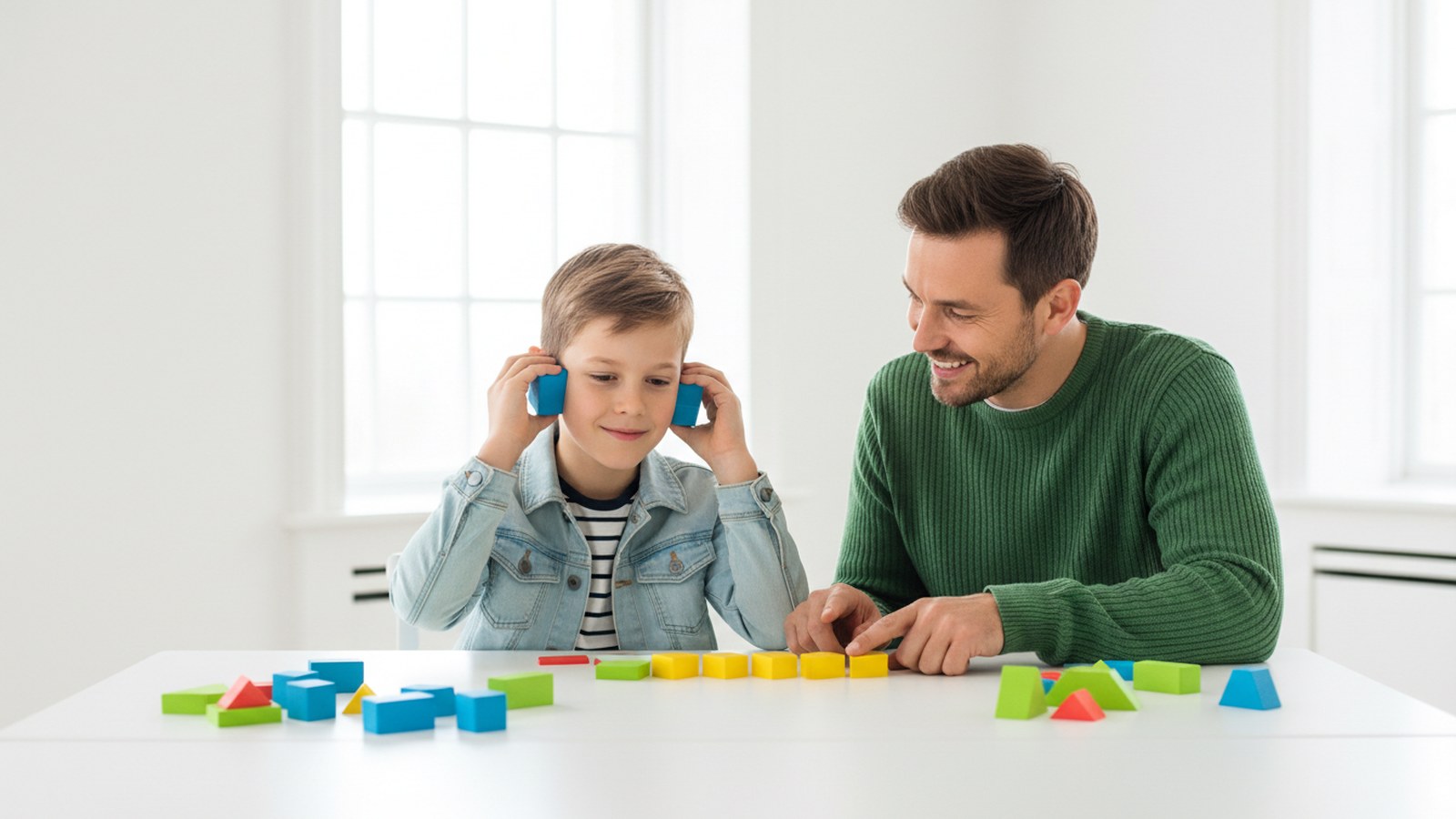
Four words arrive by audio. Your child holds all four and picks the two that end alike — which means listening past the beginnings, exactly the shift the guessing pattern is missing. Fifty exercises at each of four word levels: first, fourth, eighth, and twelfth grade reading level. Everyone starts at first grade level, whatever their age — the level names the words, not the child — and moves up when the pairs come easily.
Sessions are short, you’re in the room, and each level includes a downloadable transcript so you can run it screen-free in your own voice.
Your child isn’t skipping the ends of words out of carelessness. Their attention was never taught to go there — and attention can be taught.
“– Laura Lurns
What we claim, and what we don’t
This is phonemic awareness practice — hearing and working with the sounds inside words. Phonemic awareness is a component of reading instruction, and teaching it does improve word reading; that’s the category this exercise belongs to, and it’s why it sits closer to reading than most of what we make. What we don’t do is promise this course alone produces fluent reading or perfect spelling — it trains the ear that reading and spelling instruction rely on, and it runs alongside that instruction, not instead of it.
Parents using Learning Success programs tell us, in their own words, what they’ve seen at home:
“He is silent reading much more in the last 2 weeks… reading in his mind really fast right now.” — Diane Kasterko
“She was doing her homework, without me even asking… it was all done correctly!” — Julie Callison
Individual parents describing their own child, in their own words — not a measured result, and not a pattern we claim across families. We publish no aggregate success figures.
One ear-training course. A whole system around it.
This Ending Sounds course is part of the Brain Bloom sequence, and it’s included in All Access along with Attentive Ear, the full auditory processing program — along with the Echo Me listening ladder, Which Rhyme, the 5-Minute Reading Fix for direct reading and spelling practice, number sense courses, movement and confidence work, and coaching for you at every step.
All Access starts with an assessment — a series of questionnaires about what you’re actually seeing at home, about forty-five minutes, asking across every processing system rather than screening for one suspected thing. Within 48 hours of your finishing, your child’s personalized roadmap arrives as a PDF: which skill to build first, which program builds it, and what follows. It’s yours to keep. (Forty-eight hours is how long the document takes to reach you — not a timeline for your child.)
A screener is a starting point, not a diagnosis. If your child might need formal accommodations (an IEP or 504 plan), or you suspect a vision, hearing, or medical cause, pursue a professional evaluation too — that’s the only route to those supports.
Common questions from parents
What ages is this for?
Will this fix my child’s spelling?
How much time does it take?
Do I need a diagnosis before starting?